VIEWING ROOM
Rotas Brasileiras 2026
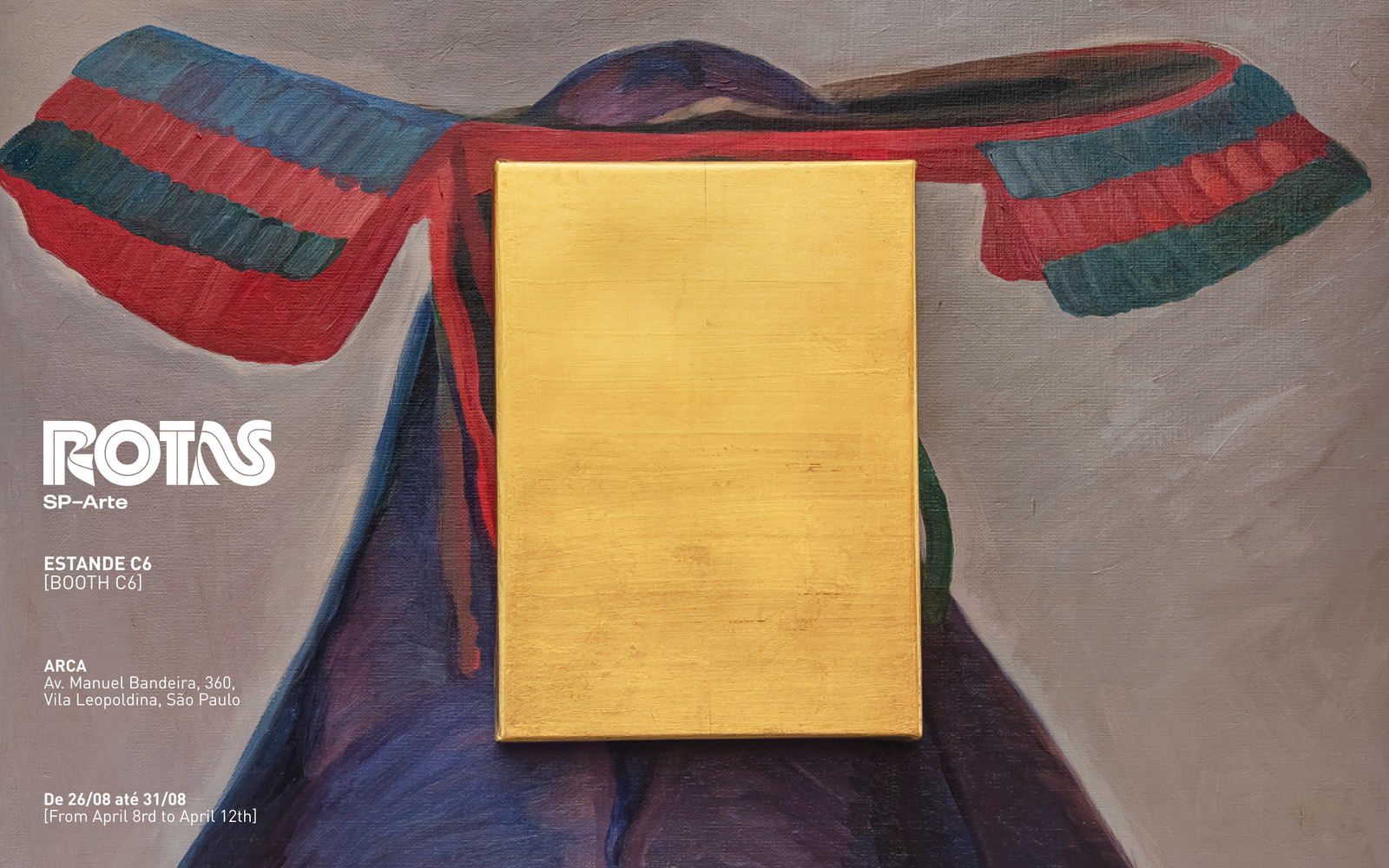
For SP-Arte Rotas 2026, Galeria Leme brings together works by Sandra Gamarra Heshiki, Olinda Silvano Inuma, and Jorge Enciso, proposing a reading of the forms of knowledge that continue to shape the visual imaginaries and political landscape of Latin America. Rather than understanding these traditions as remnants of the past, the exhibition presents them as living systems of knowledge that continue to generate ways of representing and inhabiting the territory. By bringing together artists from Peru and Paraguay, whose practices span painting, textiles, and ceramics, the gallery proposes a dialogue that transcends national borders and foregrounds the continent’s enduring cultural continuities.
Sandra Gamarra Heshiki investigates the mechanisms through which art history and national identity are constructed by critically reappropriating canonical images. In Pan de Oro sobre Retrato Indigenista II, the artist revisits a painting by José Sabogal, a central figure of Peruvian Indigenismo, covering the sitter’s face with gold leaf. By interrupting the image’s promise of transparency, Gamarra exposes the processes of exoticization, erasure, and projection that have historically shaped the representation of Indigenous peoples within the Latin American pictorial tradition.
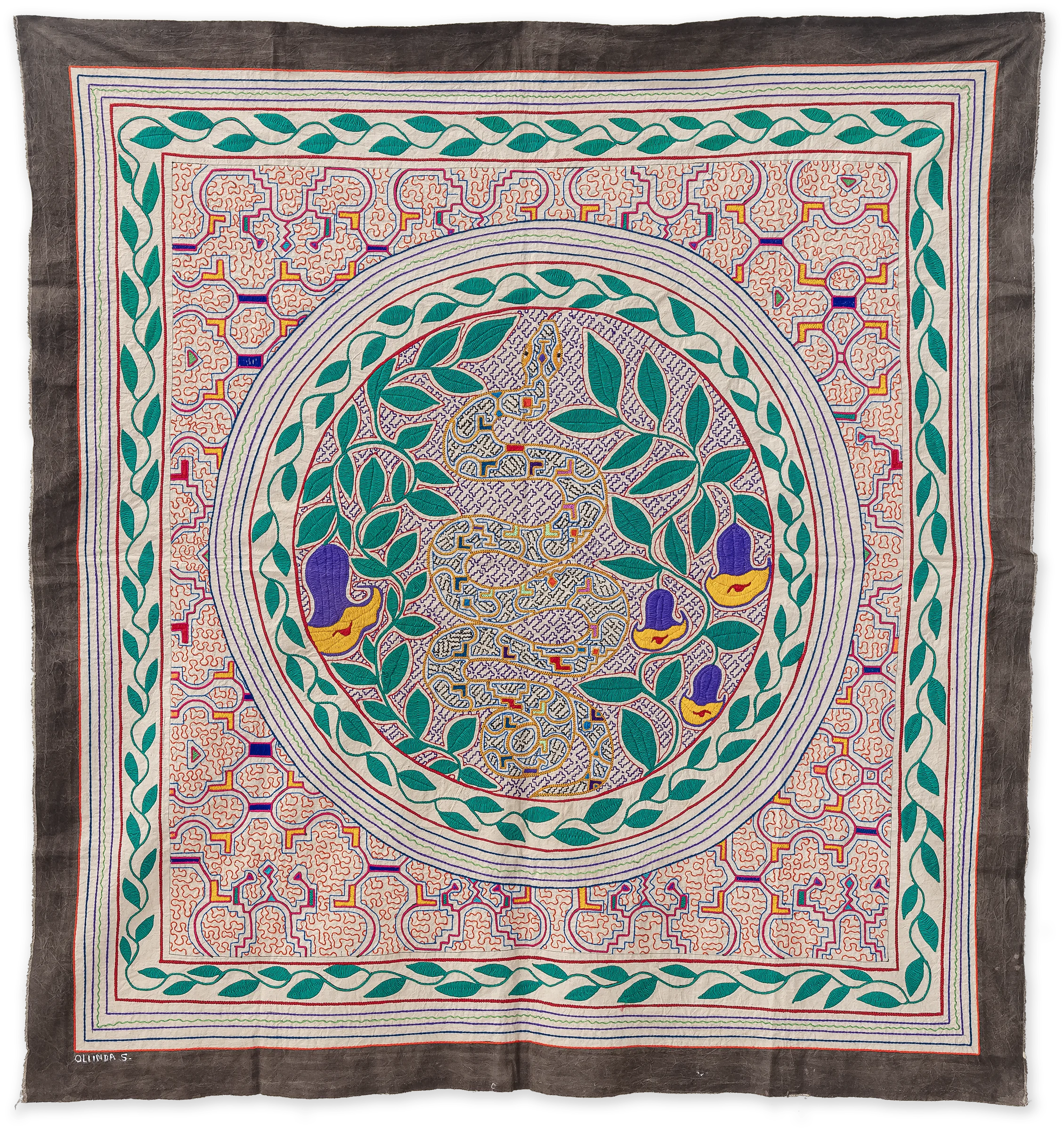
The textiles of Olinda Silvano Inuma, one of the leading representatives of the Shipibo-Konibo people, affirm the persistence of ancestral knowledge in the face of displacement and cultural assimilation. Built upon kené, the complex graphic system that organizes relationships between the body, territory, spirituality, and community, her works make visible an epistemology that does not separate art, cosmology, and everyday life. By bringing these ancestral visual languages into the contemporary art context, Silvano highlights the central role of Indigenous women as agents of cultural transmission and political resistance.
In the ceramics of Jorge Enciso, material becomes a site for investigating the enduring presence of Guaraní culture in the formation of South American identity. Enciso draws upon ancestral techniques while incorporating graphic elements derived from the Guaraní writing system to create works that reject the binary opposition between Indigenous and European inheritances, revealing Latin American identity as a plural and layered construction shaped by multiple intersections. His practice understands mestizaje not as a homogeneous synthesis but as a contested terrain of continuous negotiation and cultural reclamation.
Rather than seeking a unified narrative of Latin American identity, Galeria Leme brings together three artistic practices that reaffirm Indigenous knowledge as a contemporary mode of producing knowledge. Together, the works invite a reconsideration of the historical narratives that have shaped the idea of Latin America while opening questions around representation, memory, and the continent’s possible futures.
Jorge Enciso
Ver todas as obras do artista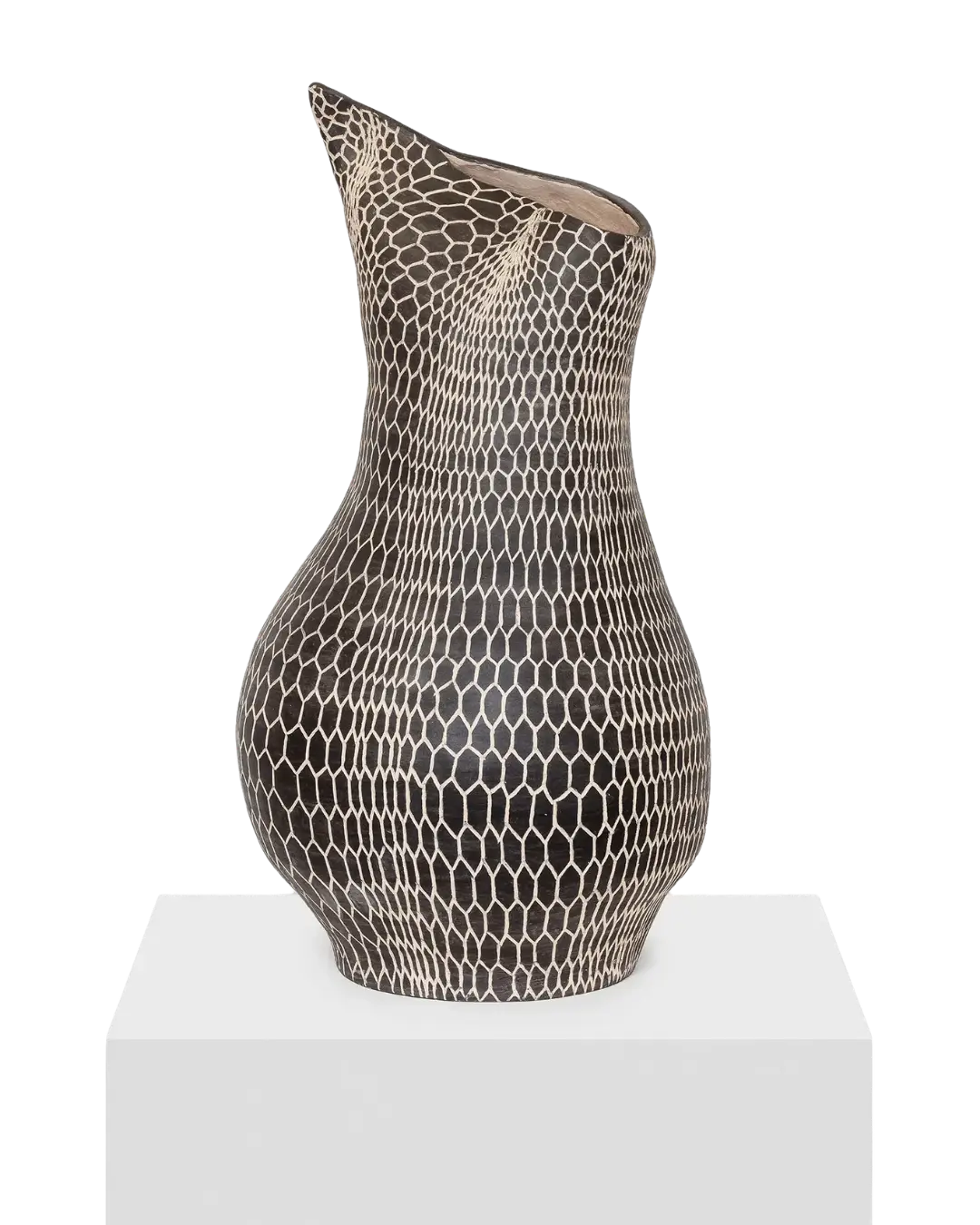
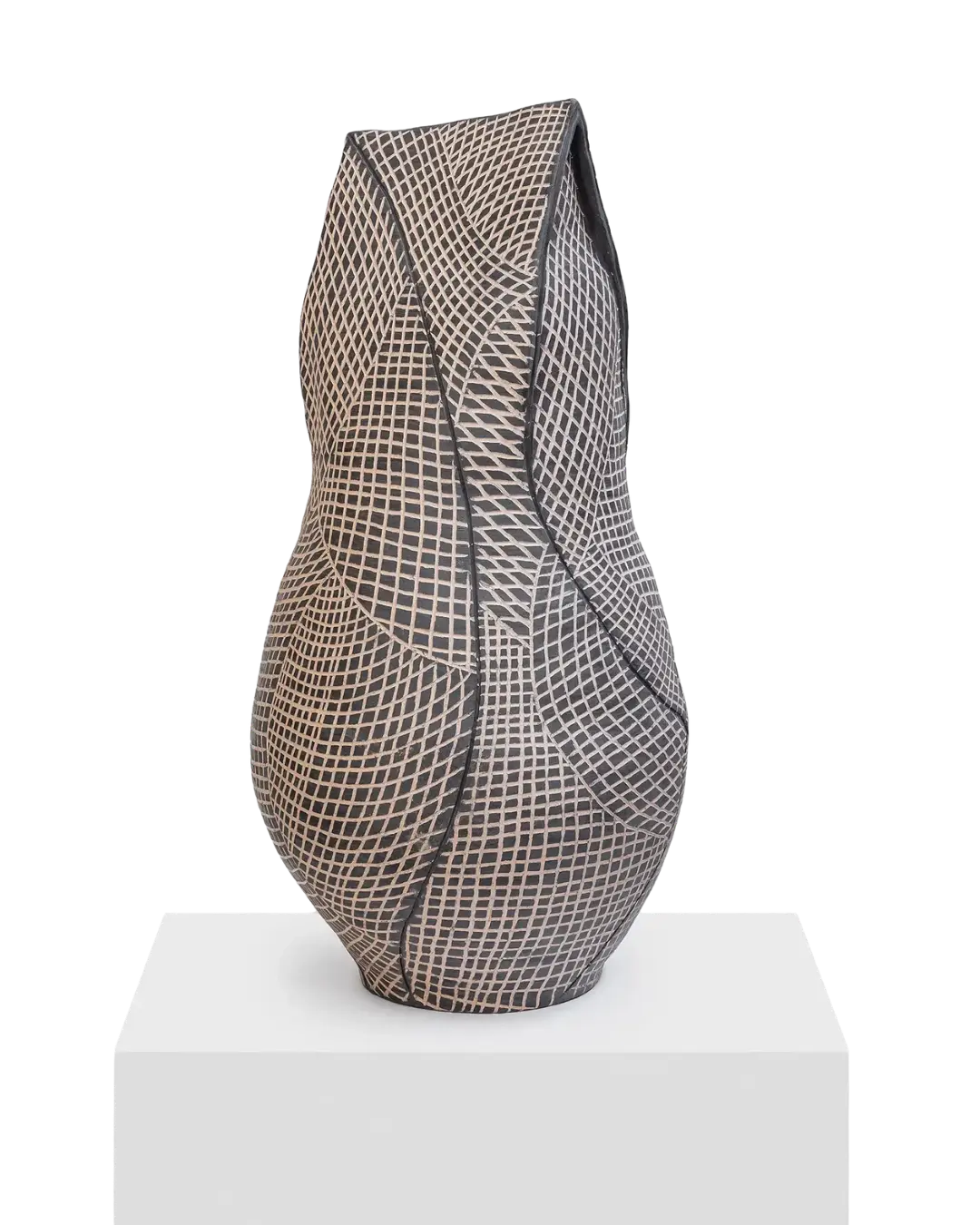
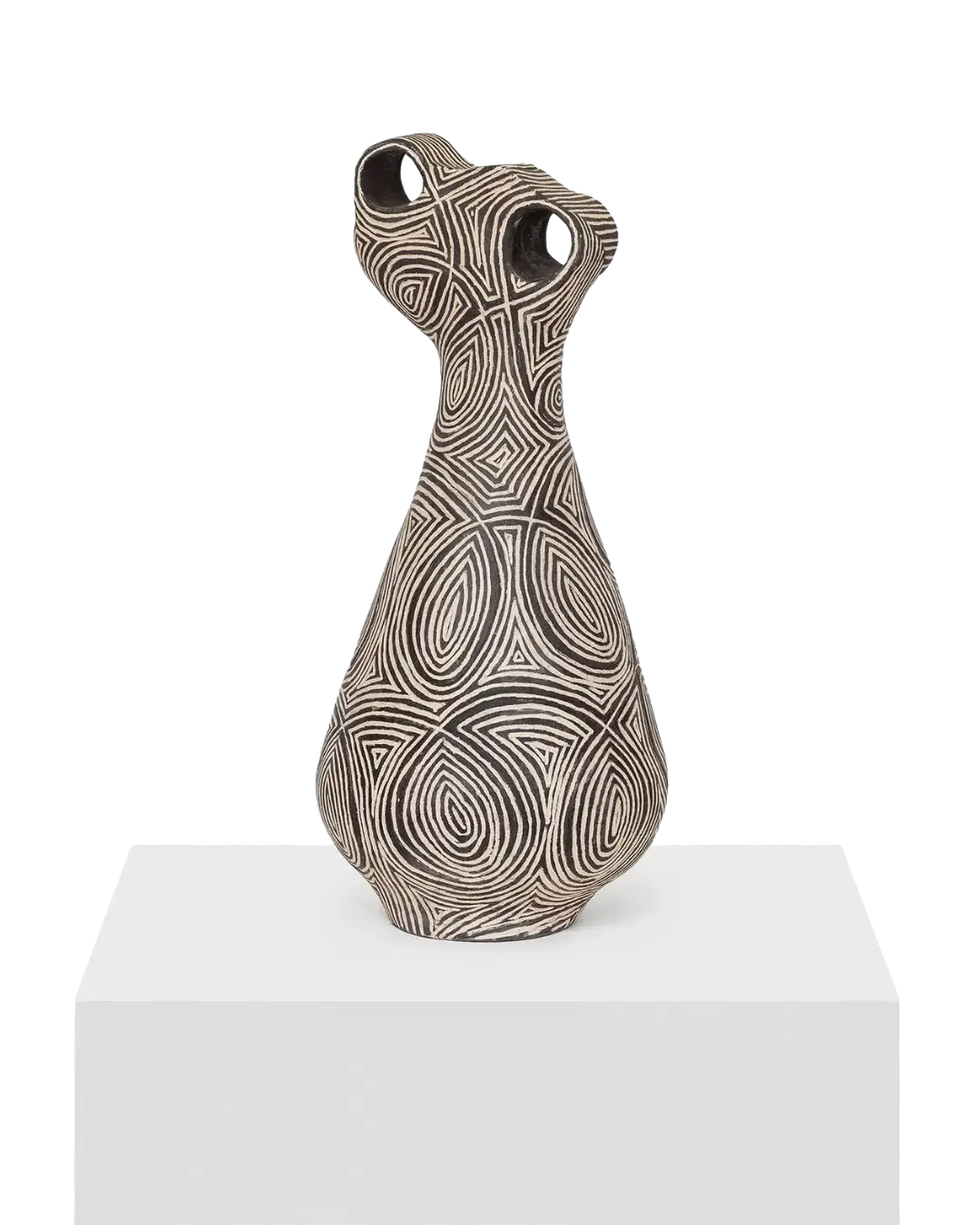
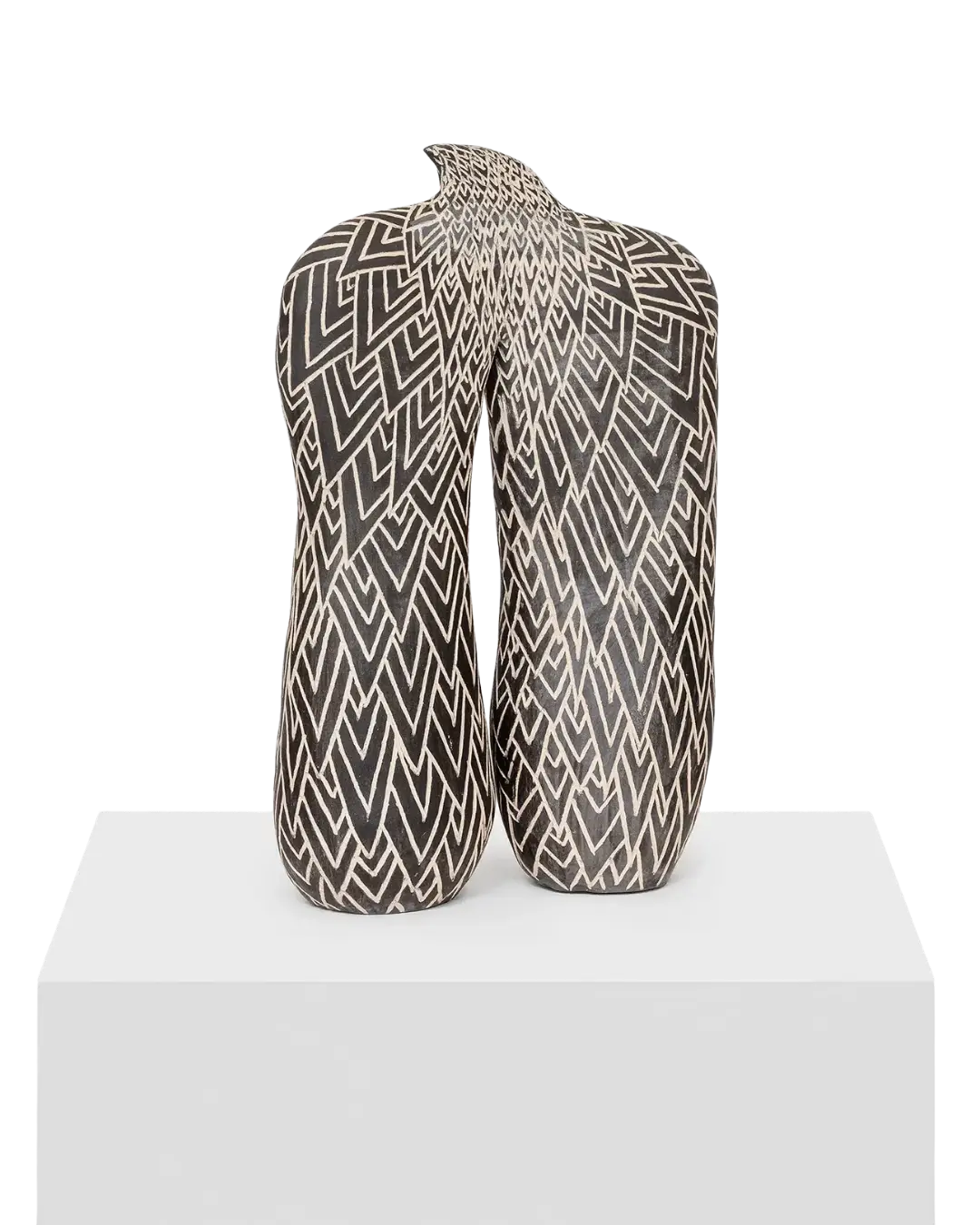
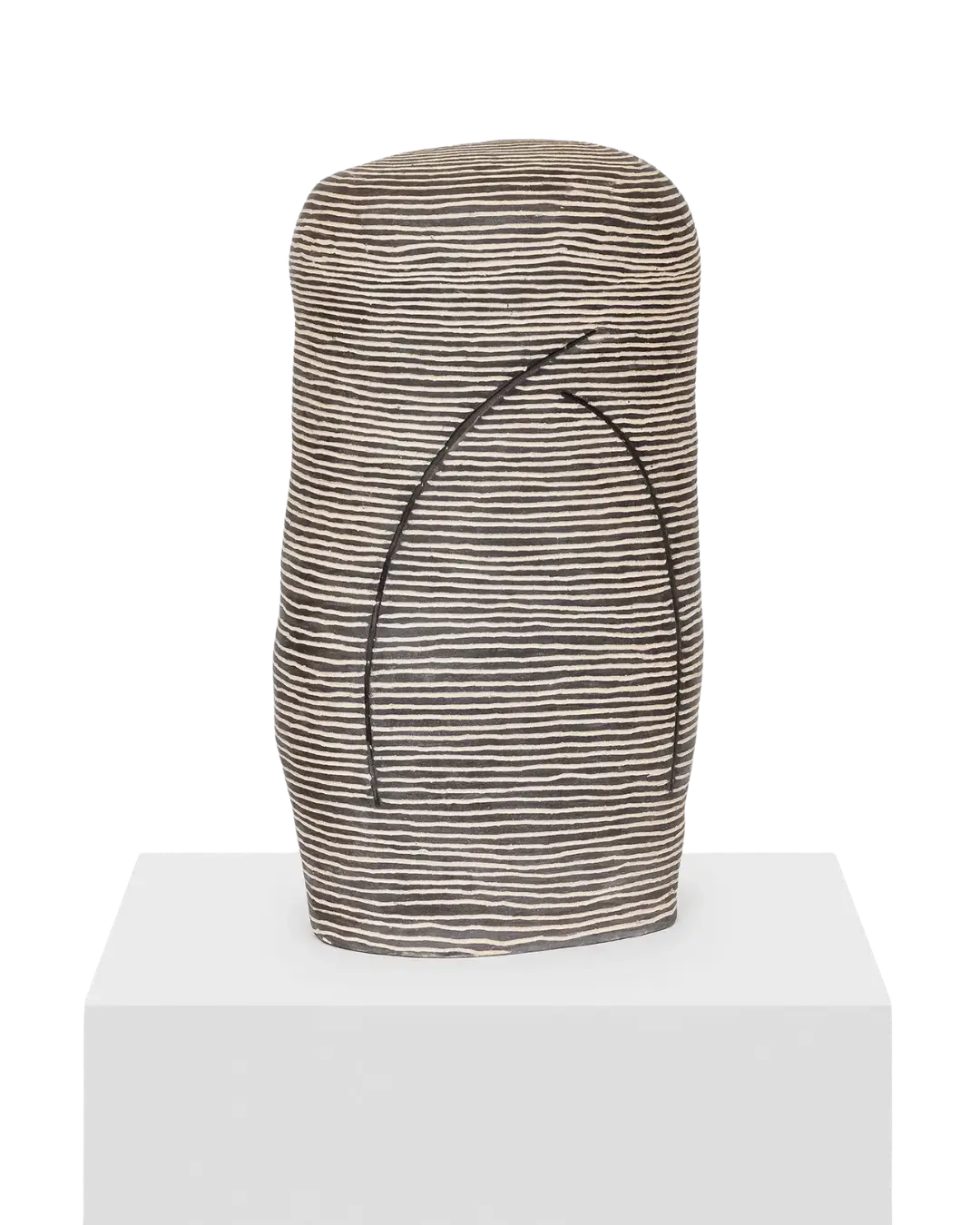
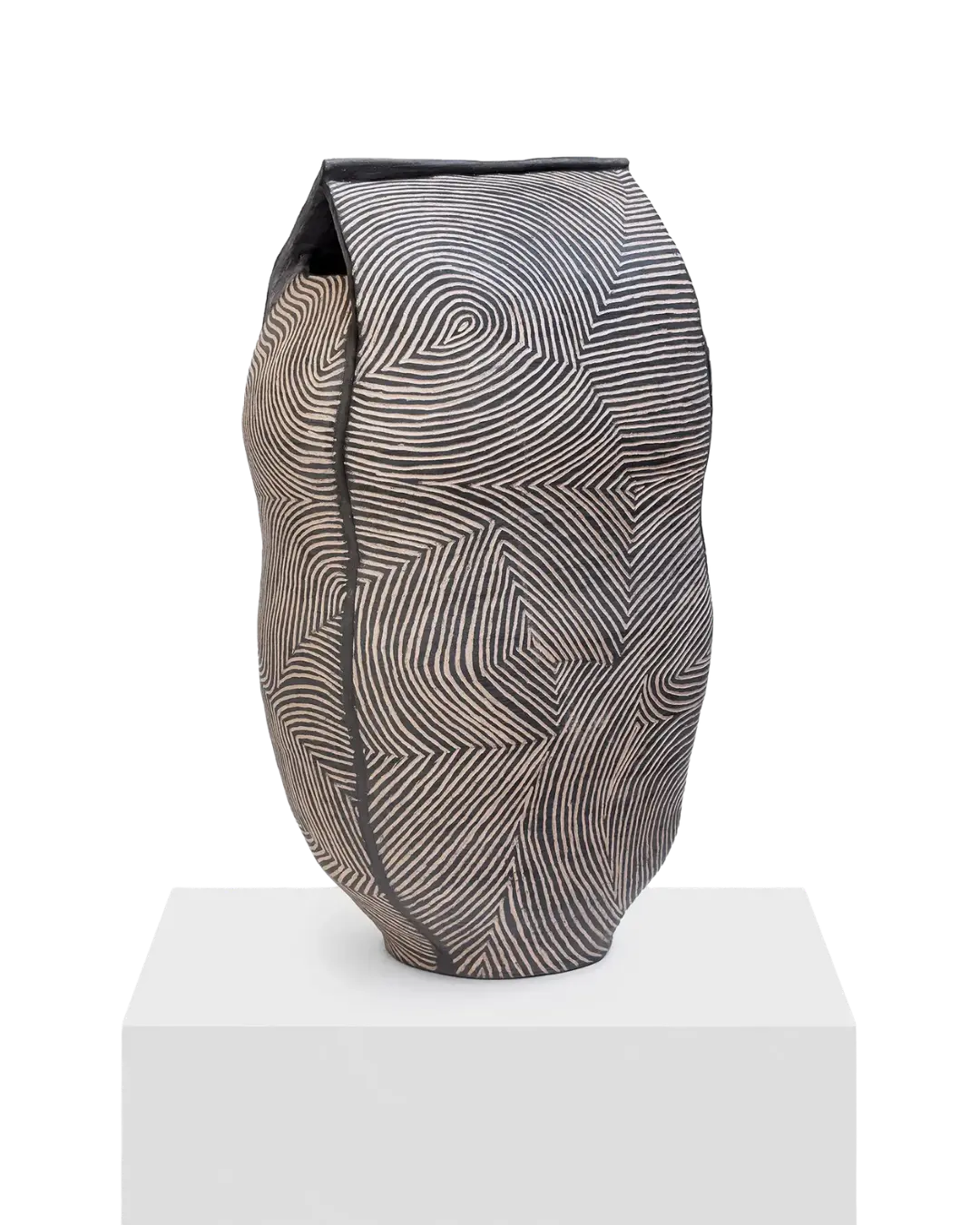
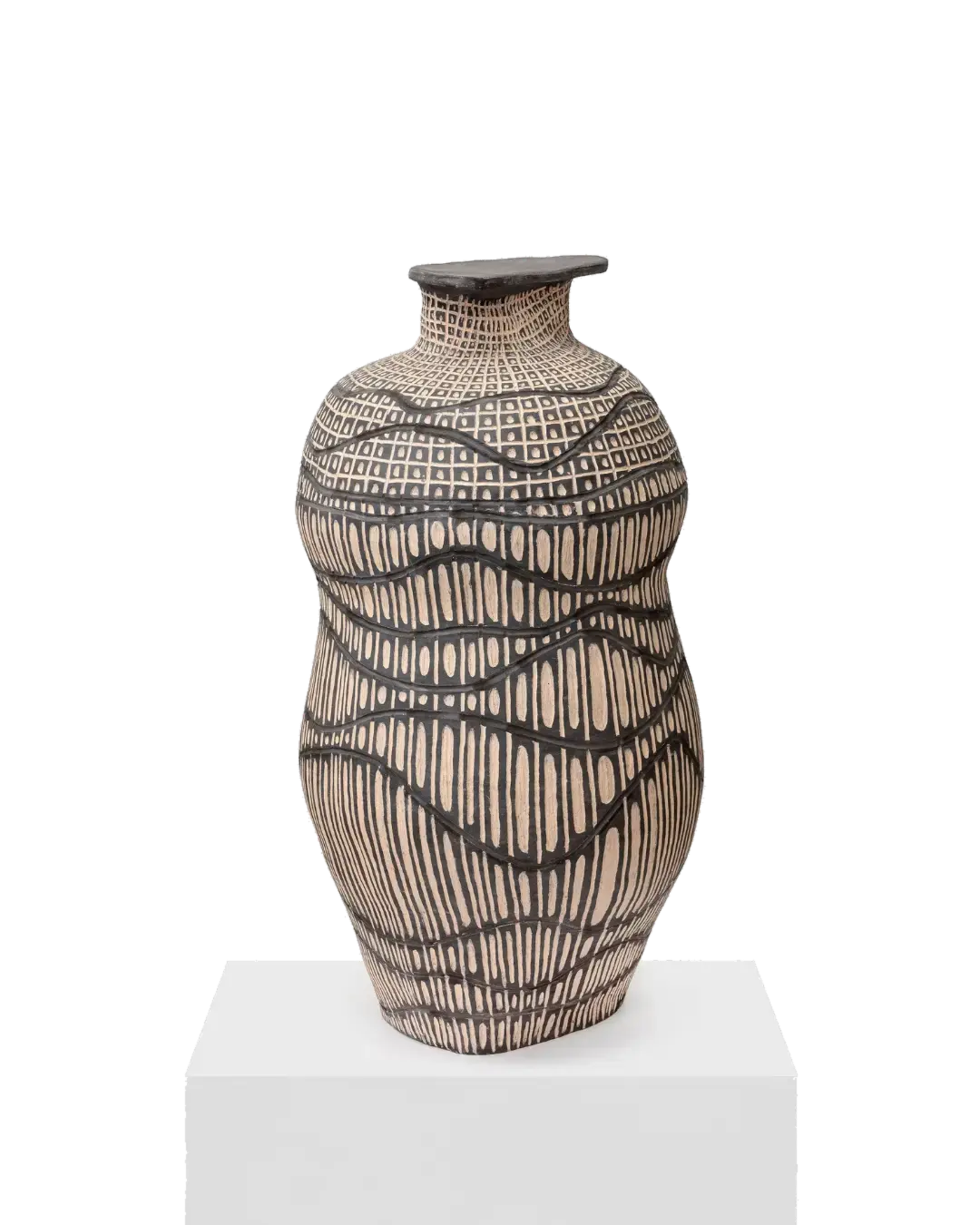
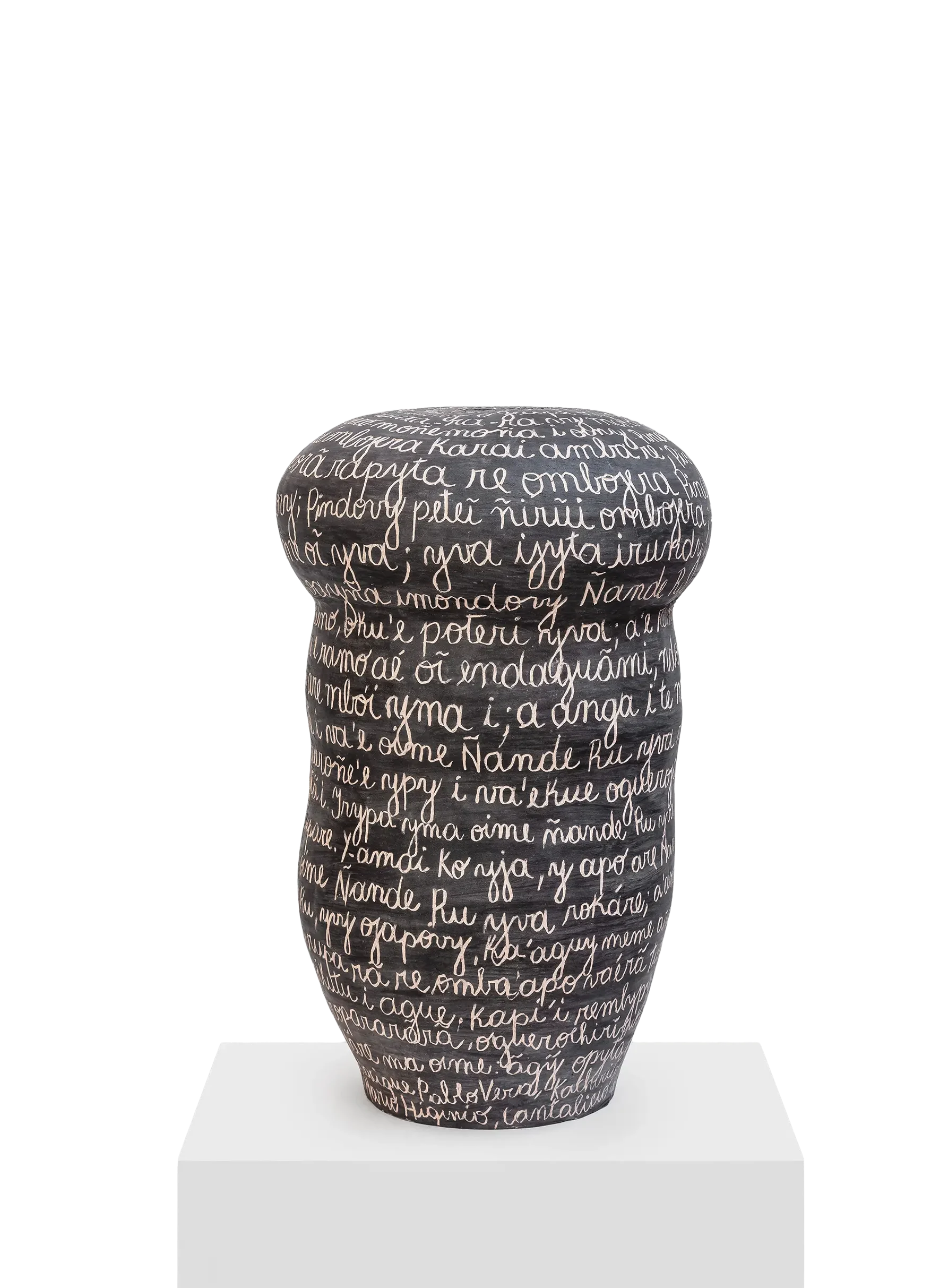
Sempre Presente, 2026
Hand-modeled white clay, coil technique, grey engobe, sgraffito, fired at 1,000°C
24,4 x 13,8 x 12,2 in
Refugio nómada / Refúgio em trânsito, 2026
Hand-modeled white clay, coil technique, grey engobe, sgraffito, fired at 1,000°C
24,4 x 11,8 in
Simbiose Segura, 2026
Hand-modeled white clay, coil technique, grey engobe, sgraffito, fired at 1,000°C
20,1 x 9,8 x 7,5 in
Ninguém Entra Sem Memória, 2026
Hand-modeled white clay, coil technique, grey engobe, sgraffito, fired at 1,000°C
18,1 x 11 x 4,7 in
Estrutura que Não Esquece, 2026
Hand-modeled white clay, coil technique, grey engobe, sgraffito, fired at 1,000°C
20,1 x 12,2 x 7,1 in
Barro habitado, 2026
Hand-modeled white clay, coil technique, grey engobe, sgraffito, fired at 1,000°C
23,2 x 13,4 in
Mutações do transito, 2026
Hand-modeled white clay, coil technique, grey engobe, sgraffito, fired at 1,000°C
22,4 x 11,8 x 11,8 in
Memoria cantada, 2026
Hand-modeled white clay, coil technique, grey engobe, sgraffito, fired at 1,000°C
26 x 12,6 in
Jorge Enciso’s works were produced in Brazil during an artist residency at Galeria Leme in São Paulo. Developed entirely within the gallery, the series emerged from the artist’s engagement with the brutalist architecture of Paulo Mendes da Rocha. Rather than using the building as a formal model, Enciso sought to listen to it: the weight of the concrete, the silence of its structures, and the solidity of an architecture conceived to endure became the material for his ceramic investigation.
Drawing on the ancestral hand-building techniques of Guarani ceramics and graphic elements inspired by Guarani writing, the artist creates works that preserve the memory of the earth while absorbing the rhythms, tensions, and geometries of Brazilian modern architecture. In these works, concrete and clay do not merge but instead coexist in a constant tension between permanence and fragility, tradition and contemporaneity. These tensions remain in continuous negotiation, making ceramics a territory of transition where different ways of inhabiting and understanding the world continue to coexist.
Olinda Silvano Inuma
Ver todas as obras do artista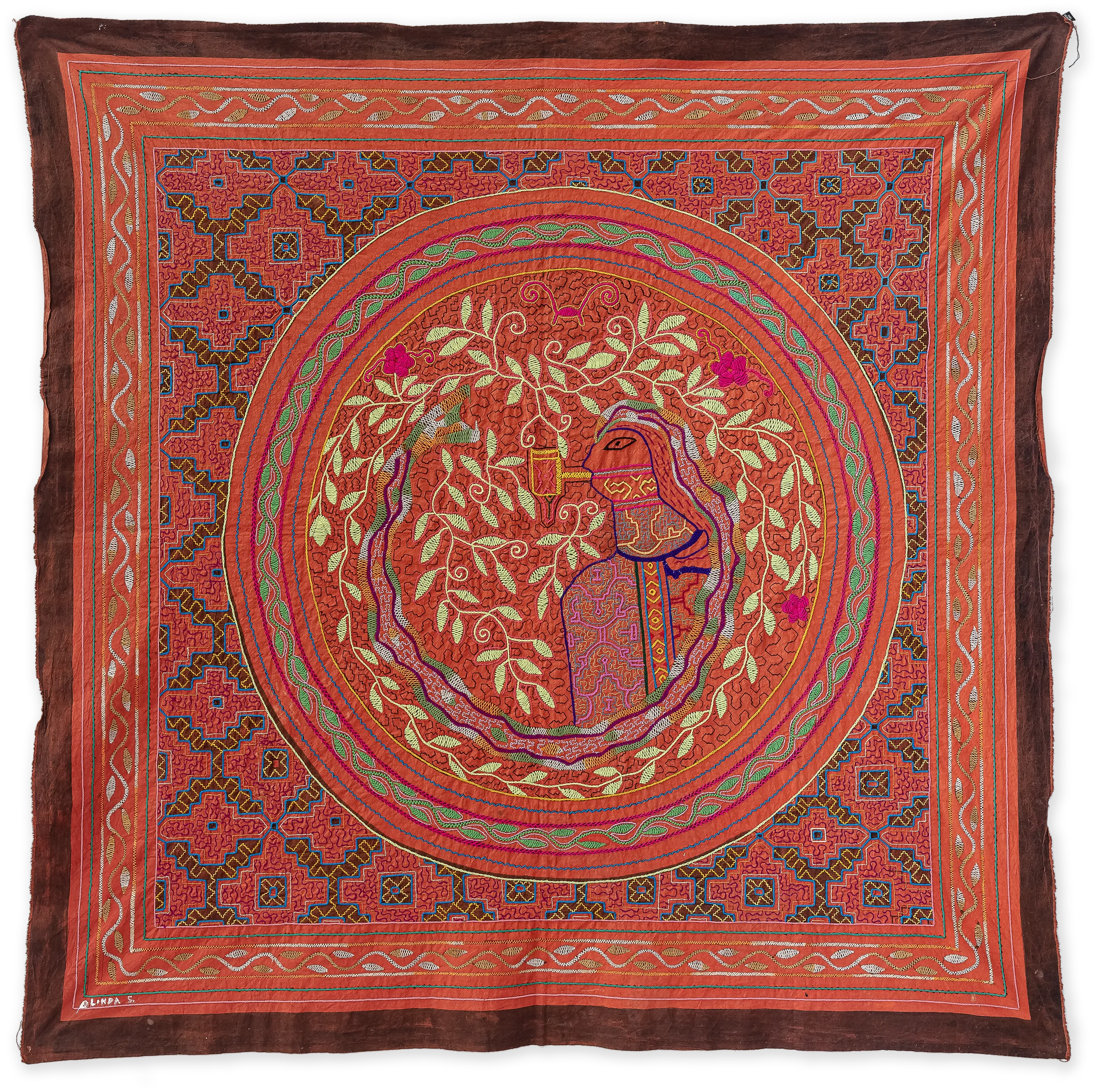
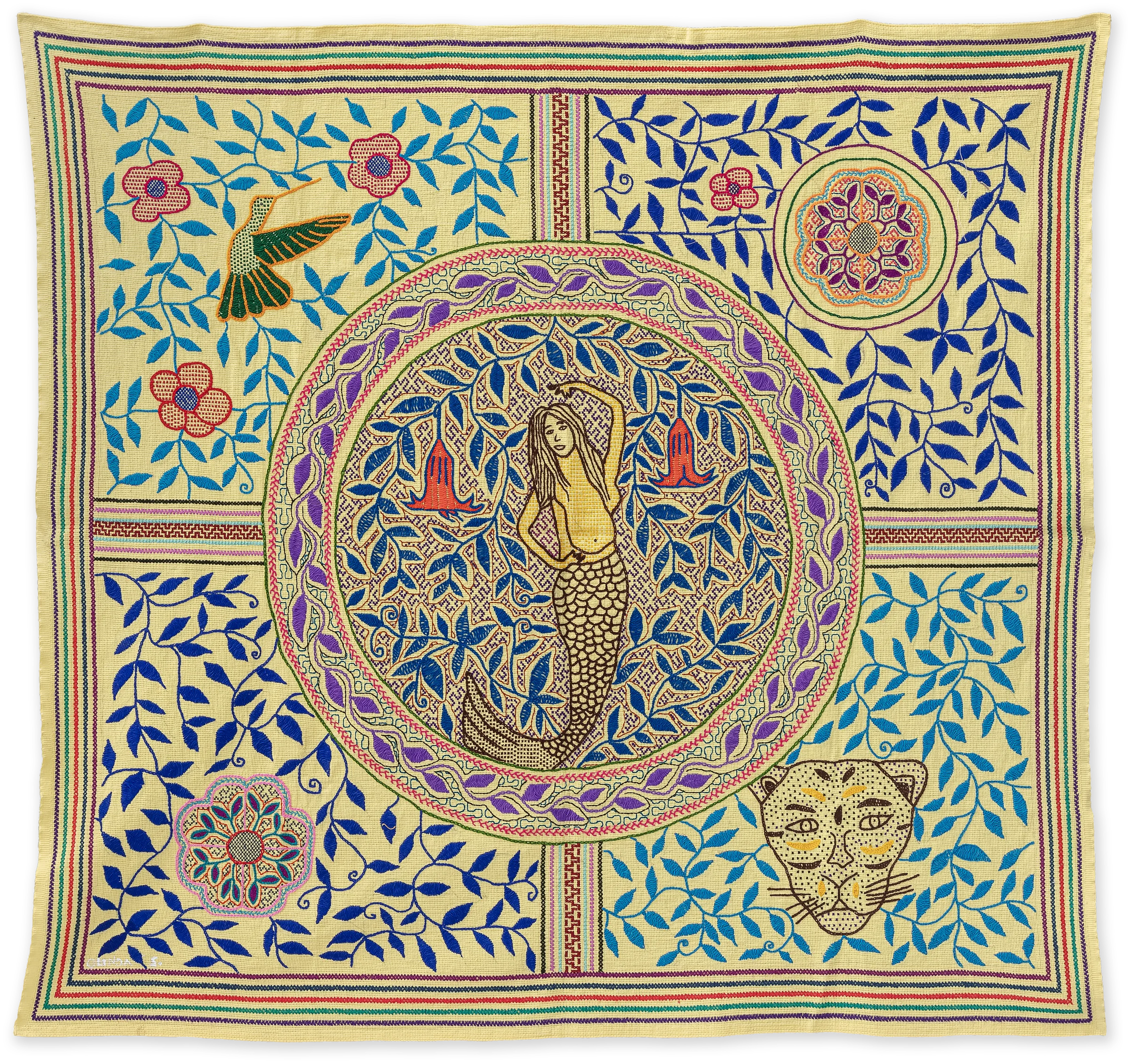
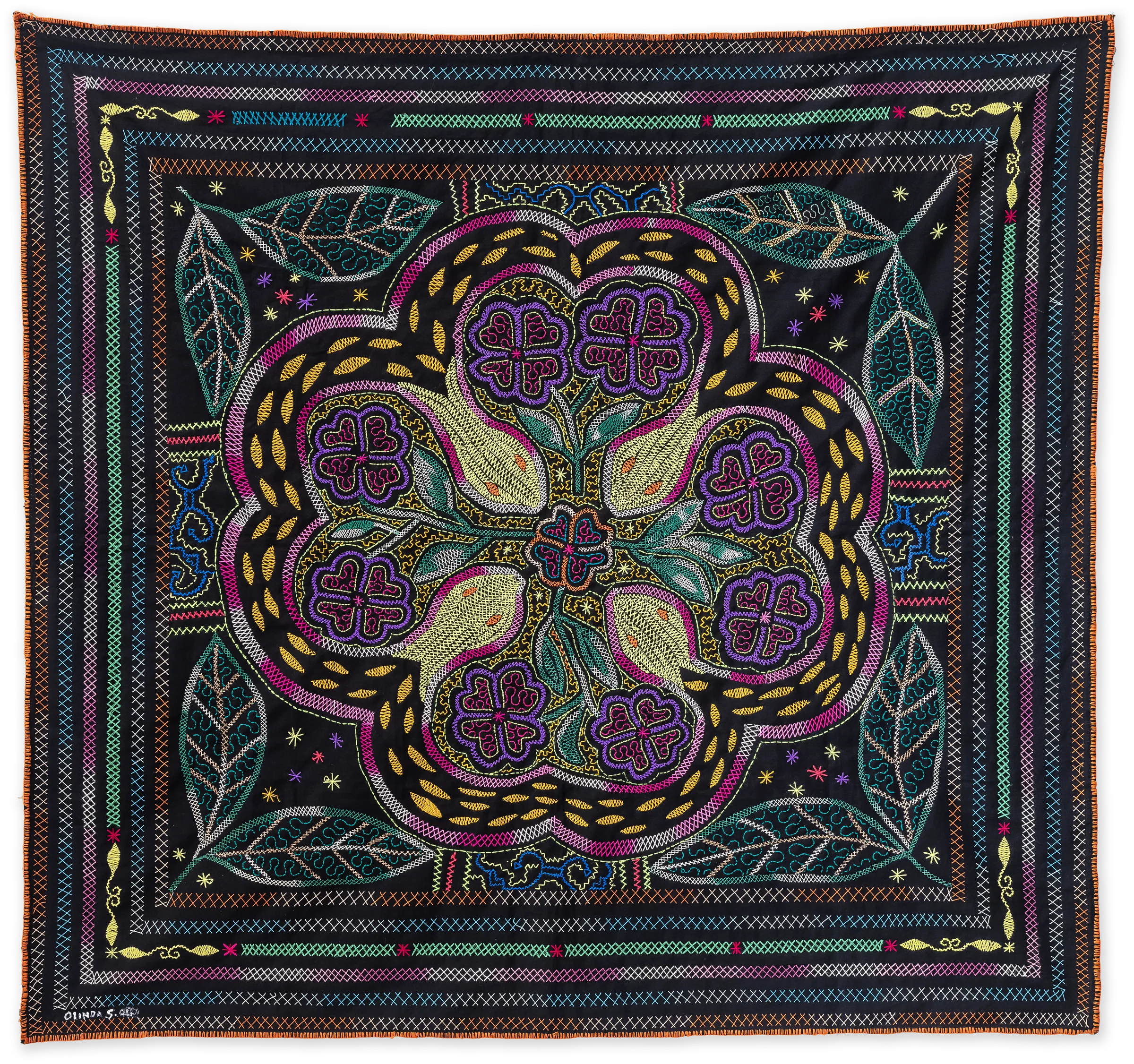
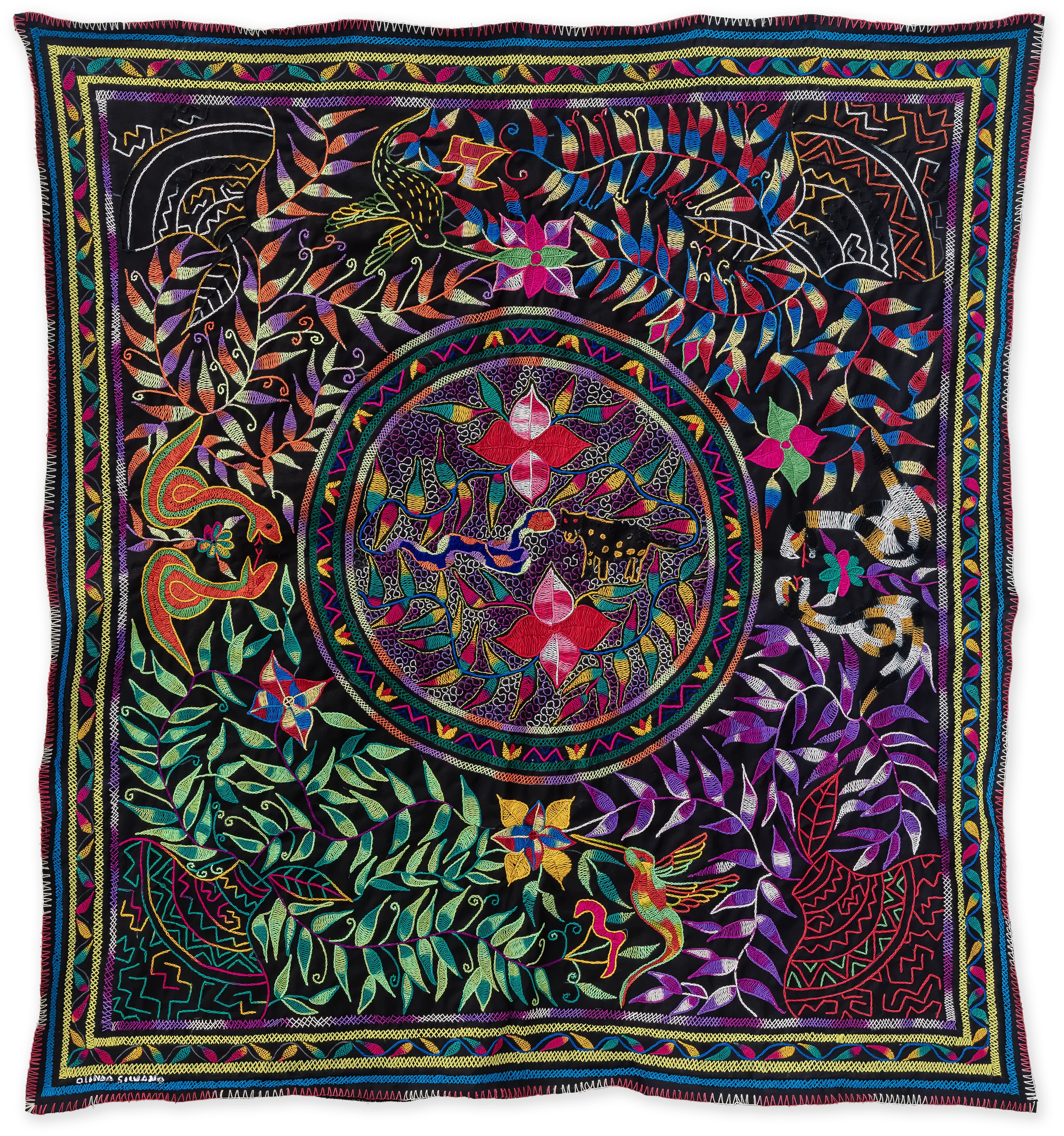
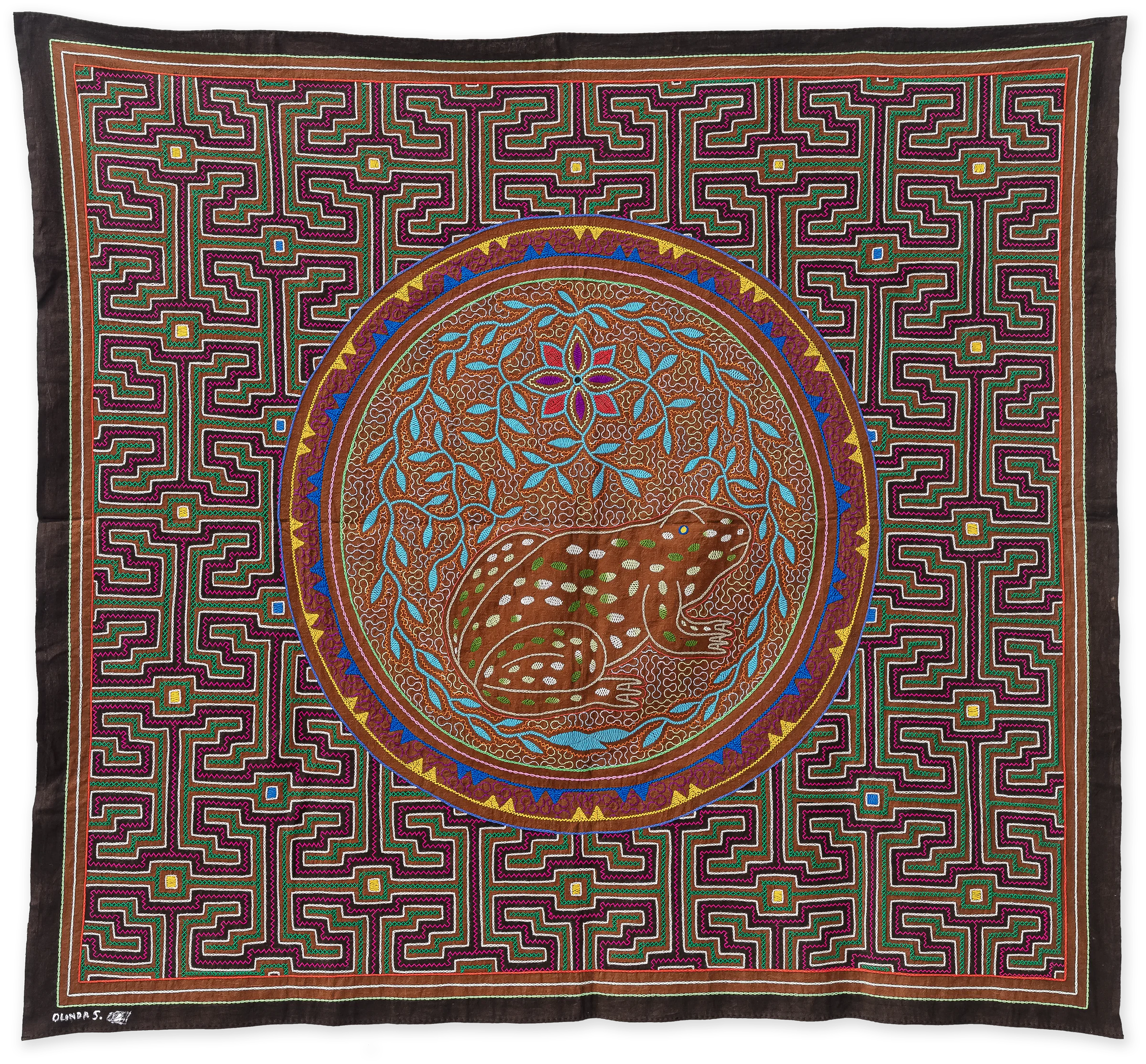
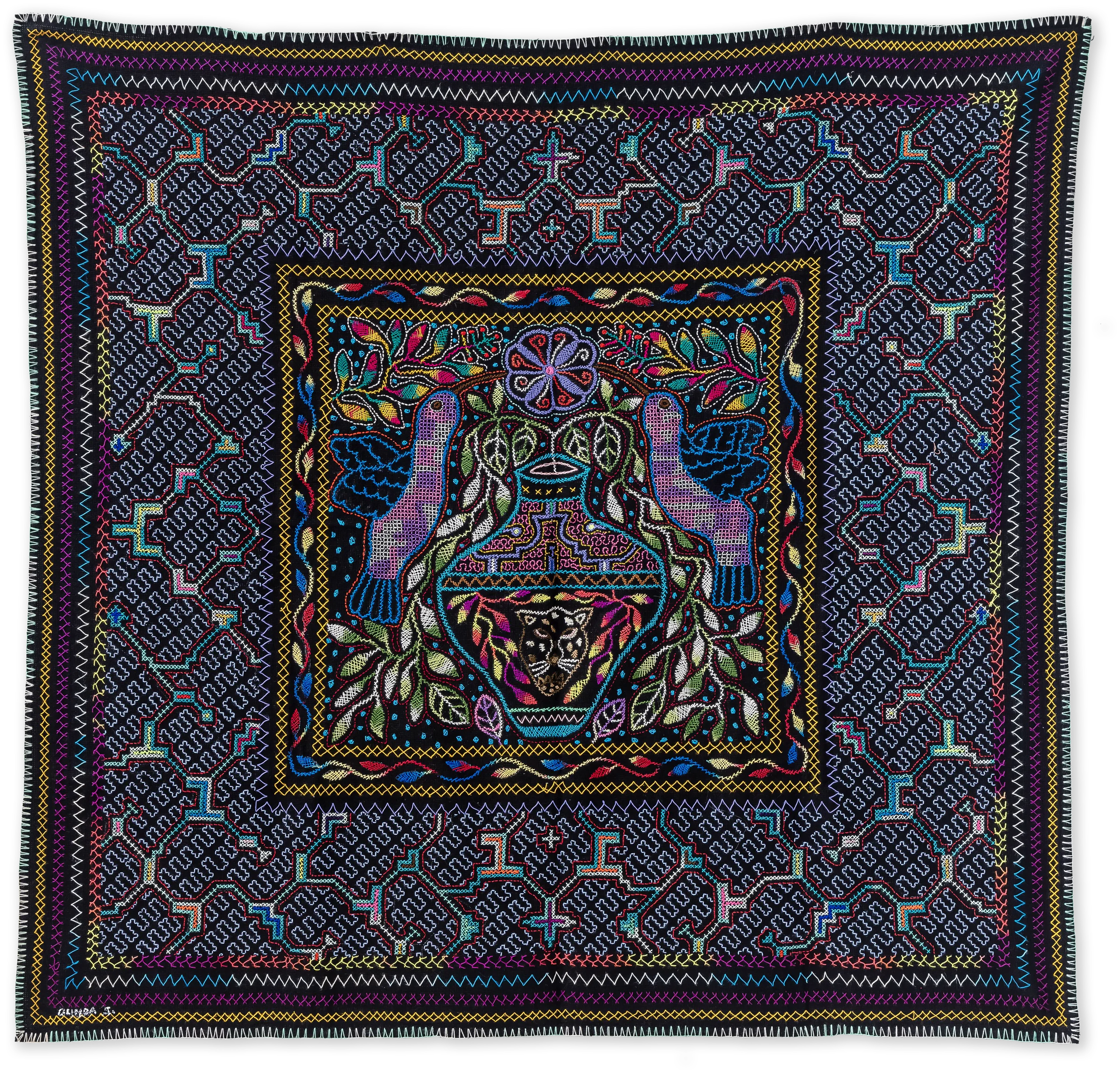
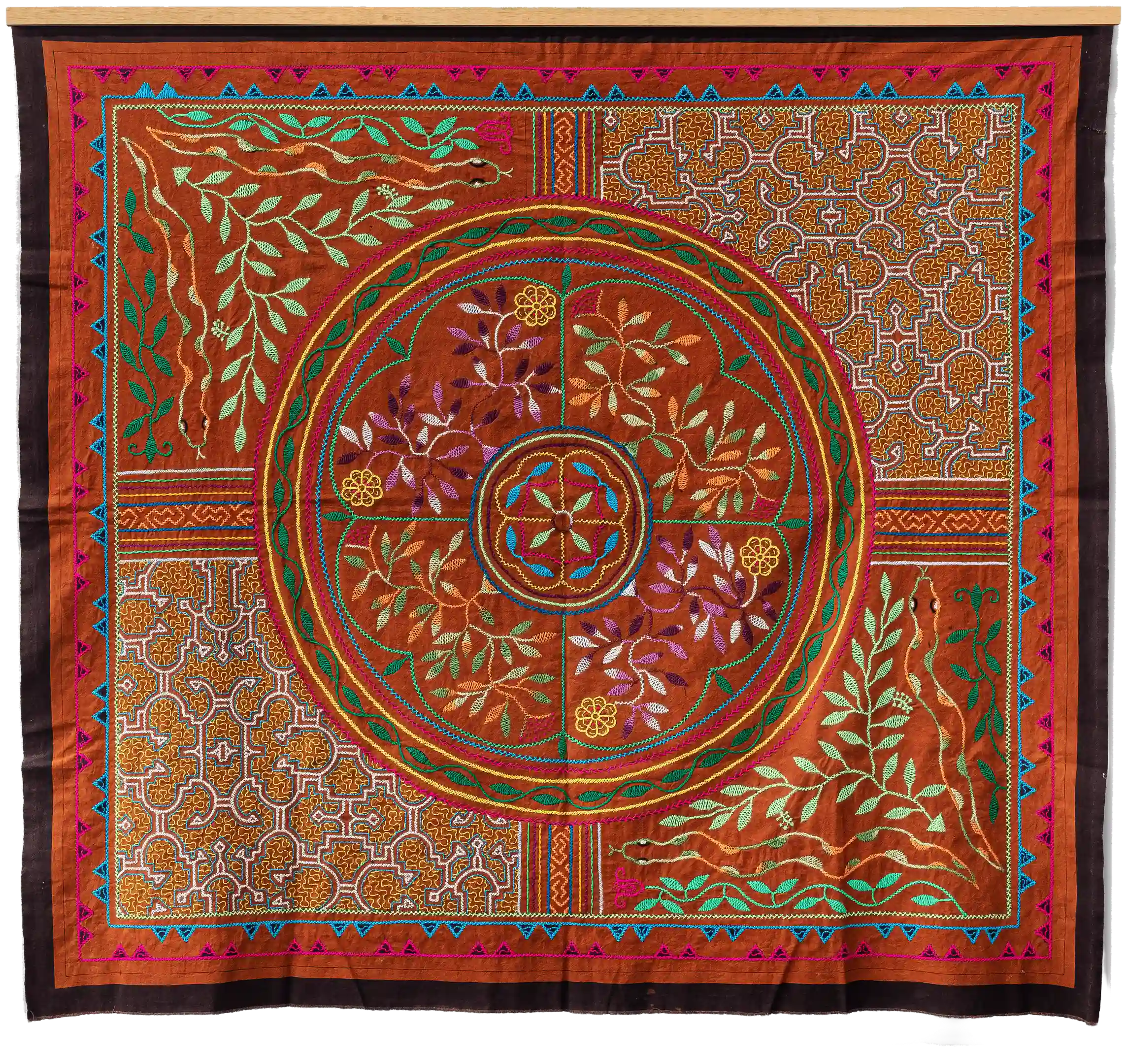
Maestro y la Invocación de las Plantas Madre, 2022
Embroidery and natural dyeing on tocuyo
58,7 x 57,5 in
Guardián de la Medicina Ancestral, 2020
Embroidery and natural dyeing on tocuyo
52,8 x 57,9 in
Olinda Silvano Inuma’s tapestries affirm the permanence of the ancestral knowledge of the Shipibo-Konibo people in the face of processes of displacement and cultural assimilation. Built from kené, a complex graphic system that organizes relationships between body, territory, spirituality, and community, her works make visible a cosmology in which art, knowledge, and everyday life are inseparable. By bringing these patterns into the contemporary art space, Silvano highlights the role of Indigenous women as agents of cultural transmission and political resistance.
Recognized as one of the leading contemporary artists of the Shipibo-Konibo people, Olinda Silvano Inuma participated in the 60th Venice Biennale (2024), Foreigners Everywhere. Her work has also been shown in institutions such as the Centre Pompidou, Paris, the Fondation Cartier pour l’Art Contemporain, Paris, and the Biennale of Sydney. In September 2026, she will participate in MASP’s annual thematic exhibition Latin American Histories.
Sandra Gamarra Heshiki
Ver todas as obras do artista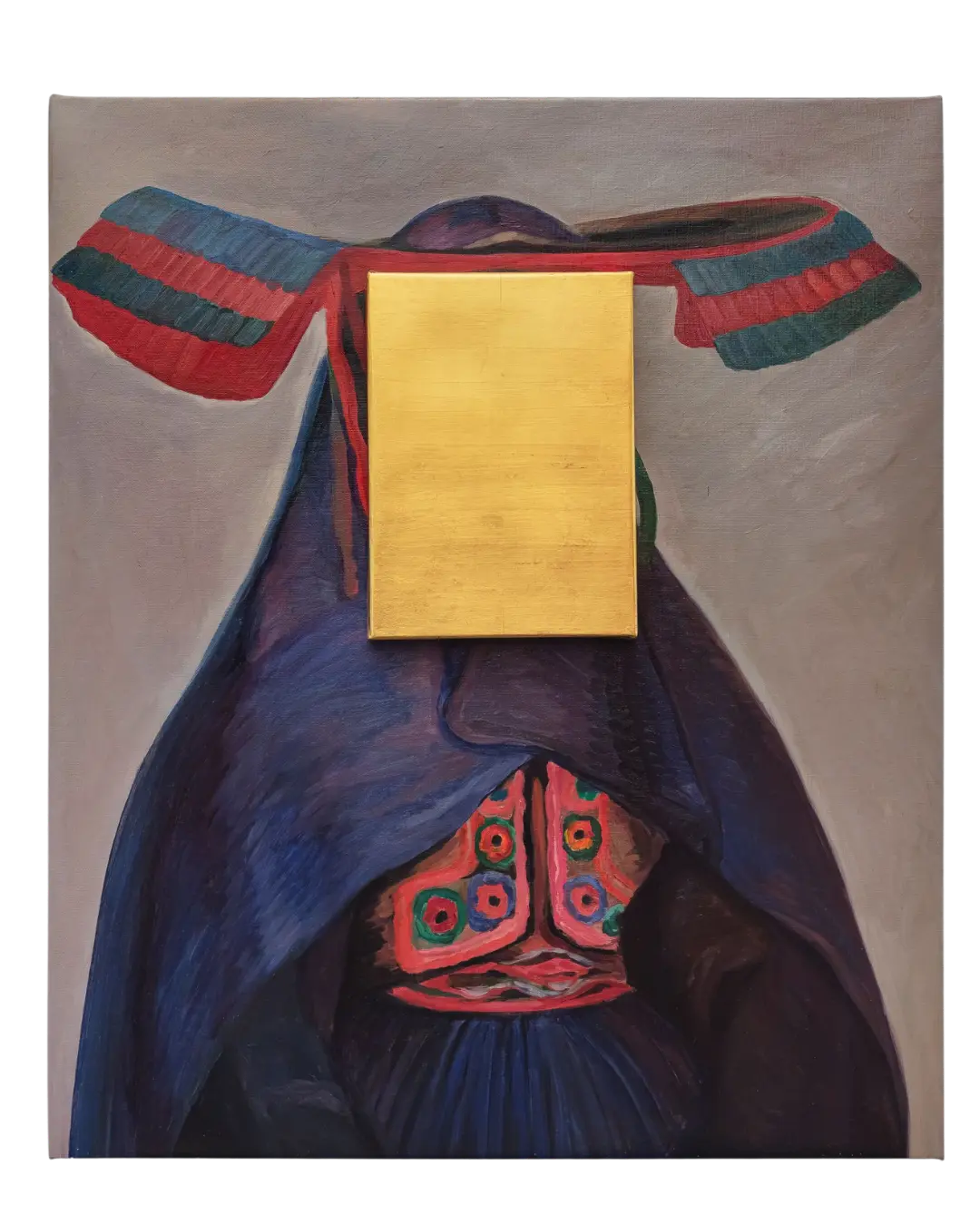
In Pan de Oro sobre Retrato Indigenista II, Sandra Gamarra Heshiki revisits a painting by José Sabogal, a central figure of Peruvian Indigenism, to investigate how art history contributed to the construction of imaginaries surrounding Indigenous peoples. By covering the figure’s face with gold leaf, the artist interrupts the image’s promise of transparency and reveals the mechanisms of exoticization, erasure, and projection that have historically shaped their representation within the Latin American pictorial tradition. Through the critical reappropriation of canonical images, her practice questions the narratives of art history and proposes a revision of visual repertoires produced under colonial logic.
Born in Lima, Peru, and based in Madrid, Sandra Gamarra Heshiki represented Spain at the 60th Venice Biennale (2024) with the project Pinacoteca Migrante and, in 2026, presented her first major retrospective exhibition, Réplica, at MASP. Her work is part of important public and private collections, including the Museo Nacional Centro de Arte Reina Sofía (Madrid), the Museo de Arte de Lima (MALI), MoMA (New York), Tate Modern (London), the UBS Art Collection, and the Colección Patricia Phelps de Cisneros (CPPC), among others.