VIEWING ROOM
Elisa Sighicelli | Le Amazzoni
Le Amazzoni
Elisa Sighicelli
Galeria Leme, São Paulo
In Greek mythology, the Amazons lived at the edges of the known world, from Scythia, north of the Black Sea, to Pontus, in northern Anatolia, and were worthy adversaries of the Greek heroes. It is said that Achilles, upon killing Penthesilea, queen of the Amazons, during the Trojan War, fell in love with her as he beheld her beauty in death. Theseus, for his part, abducted Antiope to make her his wife, prompting the Amazons to march on Athens to recover their queen. Warriors who rode, ruled and fought, they belonged to a society whose independence ran counter to the principles of Greek social organisation. They were figures of strength and courage, yet their stories almost always ended in defeat. This contradiction seems to lie at the very foundation of the myth: the Amazons had to be powerful enough to pose a threat, but not so powerful as to endanger the patriarchal order that had imagined them. Their existence preserved the memory of a different society, one in which women enjoyed political, military and sexual autonomy, while their defeat reaffirmed the power of those who told their story.
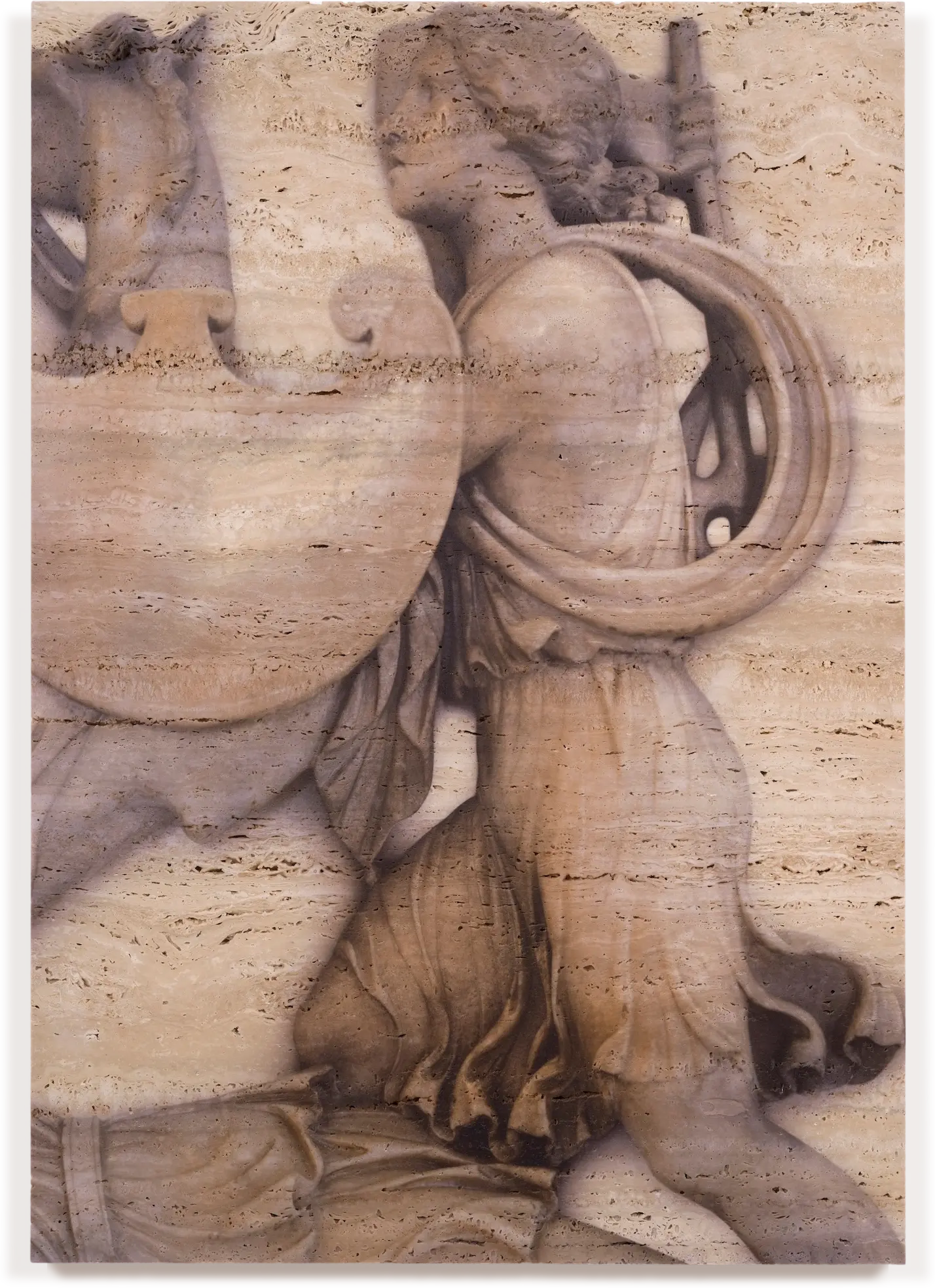
It is the endurance of these figures in the Western imagination that Elisa Sighicelli explores in Le Amazzoni, her second solo exhibition at Galeria Leme. Known for a practice that investigates the relationship between photography and sculpture, the Italian artist presents twelve photographs of details of Graeco-Roman sculptures depicting Amazons and of bas-reliefs with scenes of Amazonomachies, taken in archaeological museums in Italy, Greece, Turkey and Austria. Printed directly onto stone, the images merge with the pores and strata of the travertine, creating a short circuit between two and three dimensions. The photograph ceases to be merely the image of a sculpture and becomes, itself, stone. In returning to these representations, Sighicelli does not seek to reconstruct their mythological narratives, but rather to establish a new relationship with images that have travelled across millennia. Her framings isolate bodies, gestures and fragments of the original compositions, shifting the gaze from the scene as a whole to what each figure is still able to convey.
In ancient sculpture, the Amazons occupy an ambiguous position: their bodies are depicted at once as instruments of combat and as objects of contemplation. The warriors’ physical strength coexists with the exposure of their vulnerability. Even when they face their opponents on apparently equal terms, and at times prevail over them, the narrative leads them to defeat: their autonomy constituted a threat to be overcome. The Amazonomachy stages not merely a military confrontation but a clash between two models of society: on one side, the Greek patriarchal order; on the other, a radical alternative to imposed gender roles. Although these representations are separated from us by thousands of years, they find echoes in contradictions that extend beyond the realm of myth. The Amazons offer an ancient image of a mechanism that remains recognisable: the construction of the other as an object of both fascination and threat, whose difference must be assimilated or neutralised in order to preserve a particular order.
This other, however, was not merely imagined. Archaeological research has brought to light numerous burials of women warriors among the nomadic peoples of the Eurasian steppes, such as the Scythians and the Sarmatians, who lived between the 7th century BC and the 4th century AD. In some Scythian graves containing weapons, around a third of the individuals previously identified as warriors turned out to be female. These discoveries do not prove the existence of the Amazons of myth, but they suggest that the Greek imagination was, at least in part, nourished by contact with real women, and that the myth may have been, from the very beginning, a way for an order to translate into its own terms what it could not accommodate.
The survival of this story is not confined to the images of Antiquity. In 1541–1542, during the expedition of the Spanish conquistador Francisco de Orellana, the first to travel the entire course of the great South American river, the Dominican friar Gaspar de Carvajal recorded clashes in which Indigenous women fought at the head of the men. Faced with a territory and peoples unknown to them, the conquistadors turned to a familiar narrative to interpret what they encountered: they believed they had come upon the Amazons. Those women were real; their identification with the Greek warriors belongs to the European gaze, and it is through the conquistadors’ own chronicle that we know of the episode. The name Amazon, later given to the river, carried into the South American landscape an imaginary born on the other side of the ocean. In this way, the act of naming made the unknown recognisable, but also inscribed it into a history that did not belong to it.
There is something revealing in this transposition. Naming was also an act of colonial power: countless Indigenous names, histories and forms of knowledge were replaced by a name drawn from European classical culture. The river was not only mapped but symbolically appropriated, and a landscape inhabited by Indigenous peoples for centuries became a chapter of European memory. The image of a virgin, untouched and mysterious nature, repeated over the centuries, deepens this erasure by presupposing a landscape available for discovery and ignoring the presence and history of the peoples who already inhabited it.
Between the Amazons of Antiquity and the women described by Carvajal there is no literal correspondence, but rather the persistence of a way of looking. In both cases, what presents itself as different is interpreted according to the values of those who hold the power to represent it. Real women, on the steppes or on the banks of the river, become images onto which desires, fears and fantasies of domination are projected. The distance between these stories, separated by continents and millennia, reveals not so much a continuity of their subjects as the persistence of certain structures of thought.
By isolating the Amazons from the compositions that originally defined them, Sighicelli shifts the gaze from the narrative to the figures themselves. Her framings interrupt the battles, bring us closer to the warriors’ bodies and gestures, and allow us to recognise, beyond their status as enemies, a shared humanity. After all, the ‘other’ only exists in relation to an ‘us’ that establishes itself as the norm, defining who belongs and who must remain on the margins. This distinction, so present in ancient mythology, continues to run through our relationship with whatever we perceive as different: the women whom Greece imagined as enemies, the peoples whose names were replaced by a foreign myth.
The Amazons were defeated countless times, yet they never disappeared: they represent what patriarchy had to defeat again and again in order to assert itself, but also what it never managed to erase entirely. In Sighicelli’s photographs, the warriors outlive the narratives that determined their defeats, and their bodies, inscribed once more in stone, are no longer confined to representing the fate assigned to them. If history is written by the victors, what happens when images cease to obey the narratives that produced them? Perhaps revisiting the myth is not a matter of reversing the roles of victors and vanquished, but of questioning who had, from the very beginning, the power to define them.
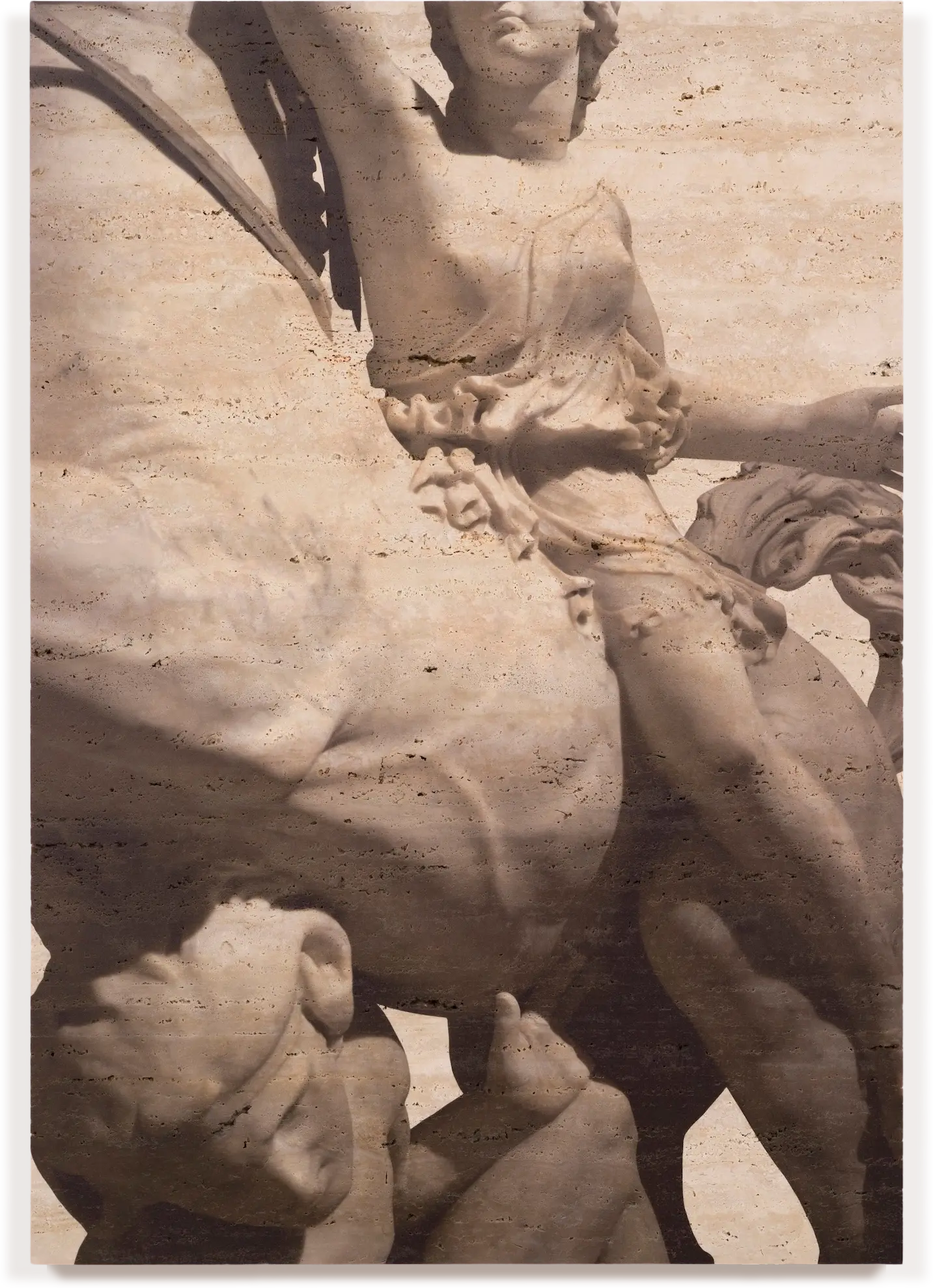
Hegeso, 2026
Elisa Sighicelli
34,3 x 23,6 x 1,6 in
Ed. 1 + 1 P.A
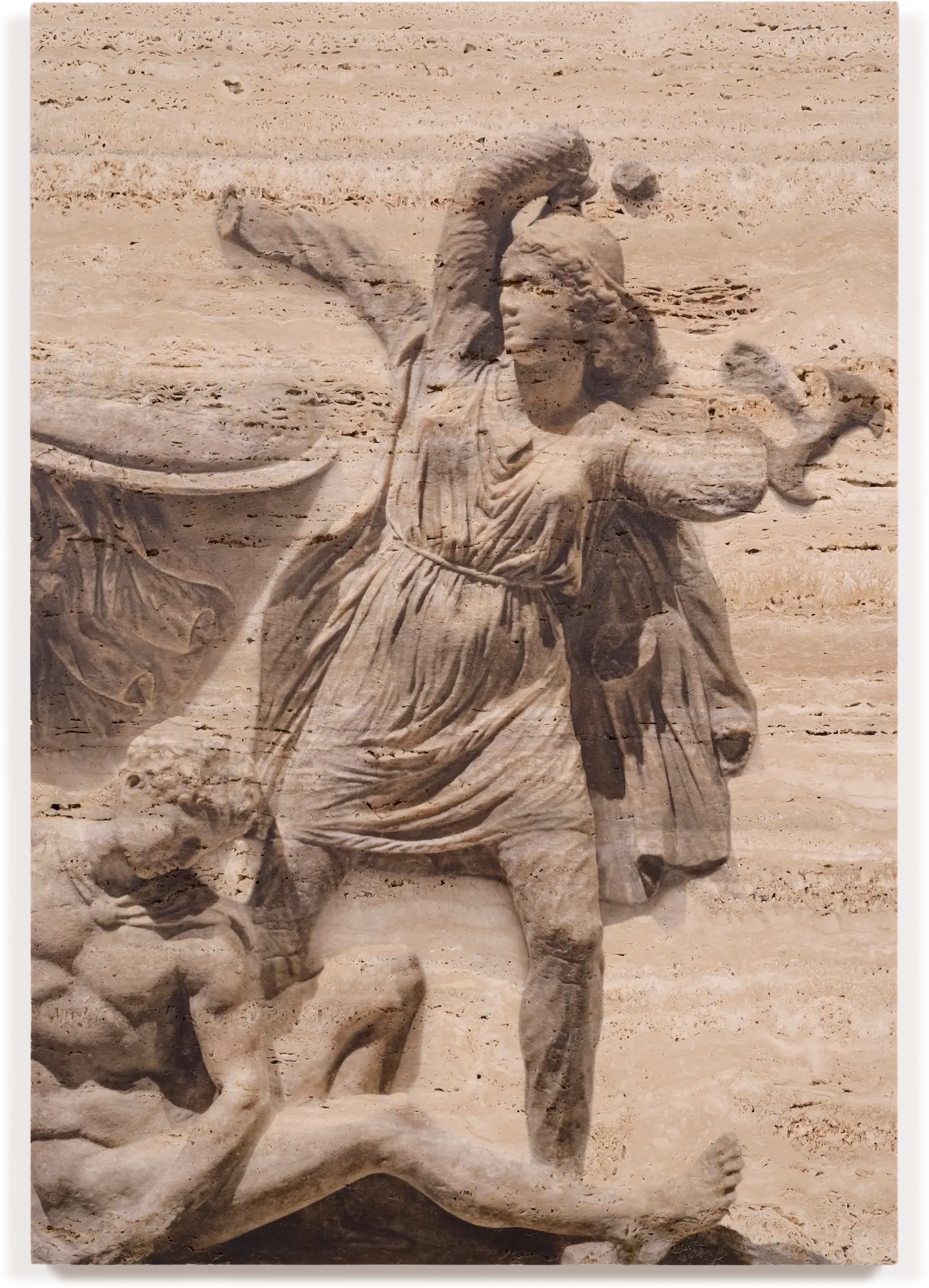
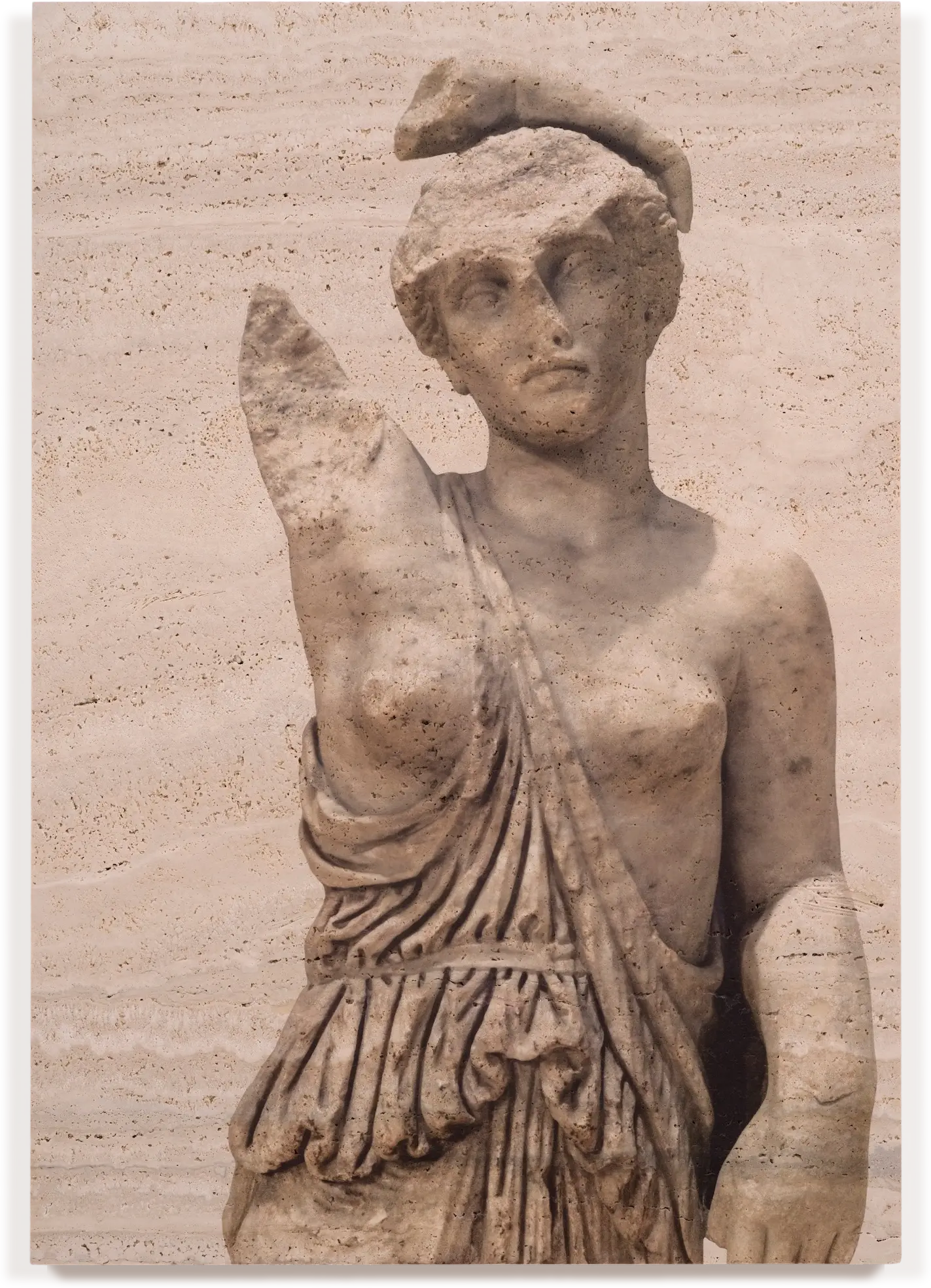
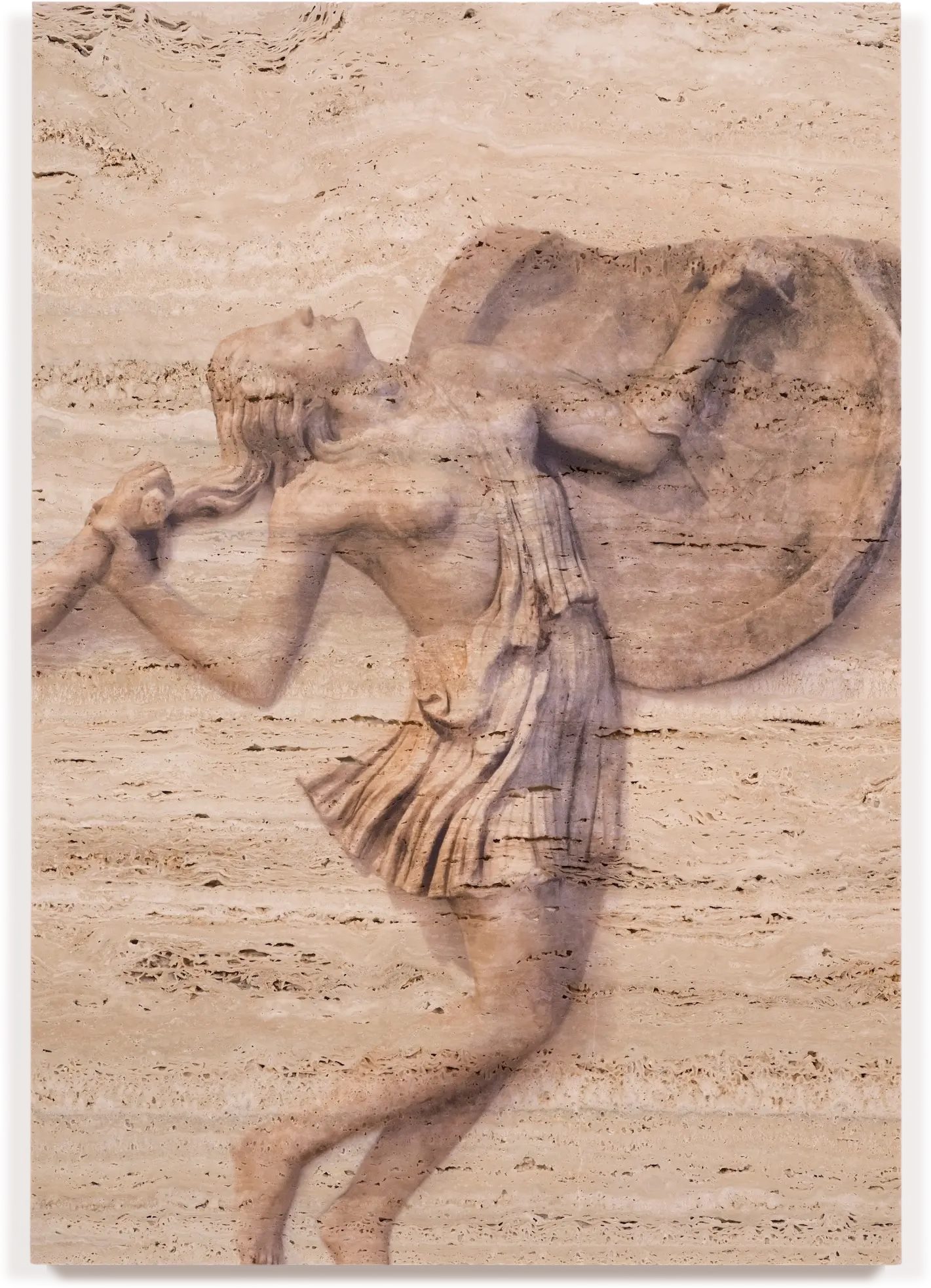
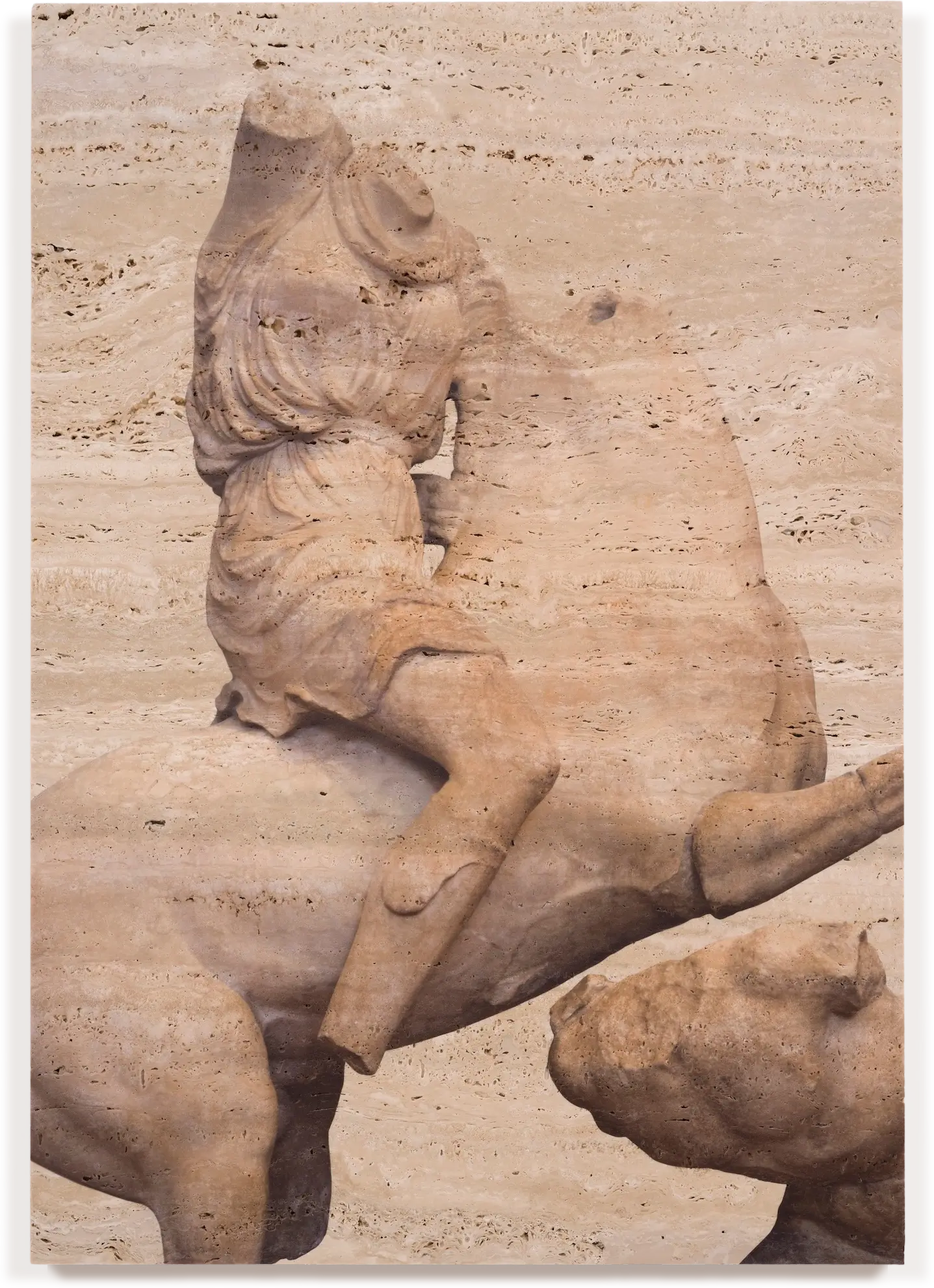
Polemusa, 2026
Elisa Sighicelli
34,3 x 23,6 x 1,6 in
Ed. 1 + 1 P.A
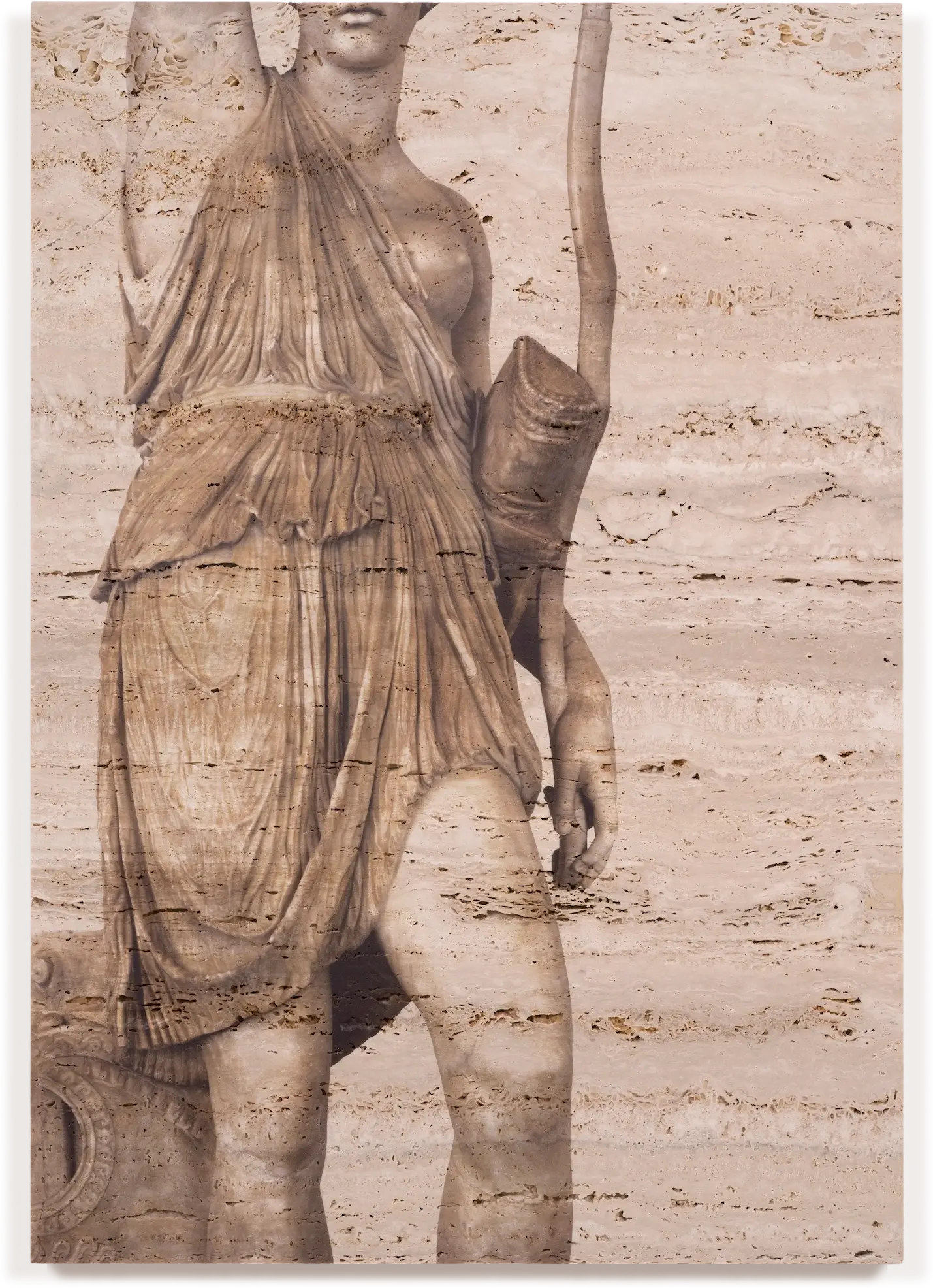
Penthesilea, 2026
Elisa Sighicelli
34,3 x 23,6 x 1,6 in
Ed. 1 + 1 P.A
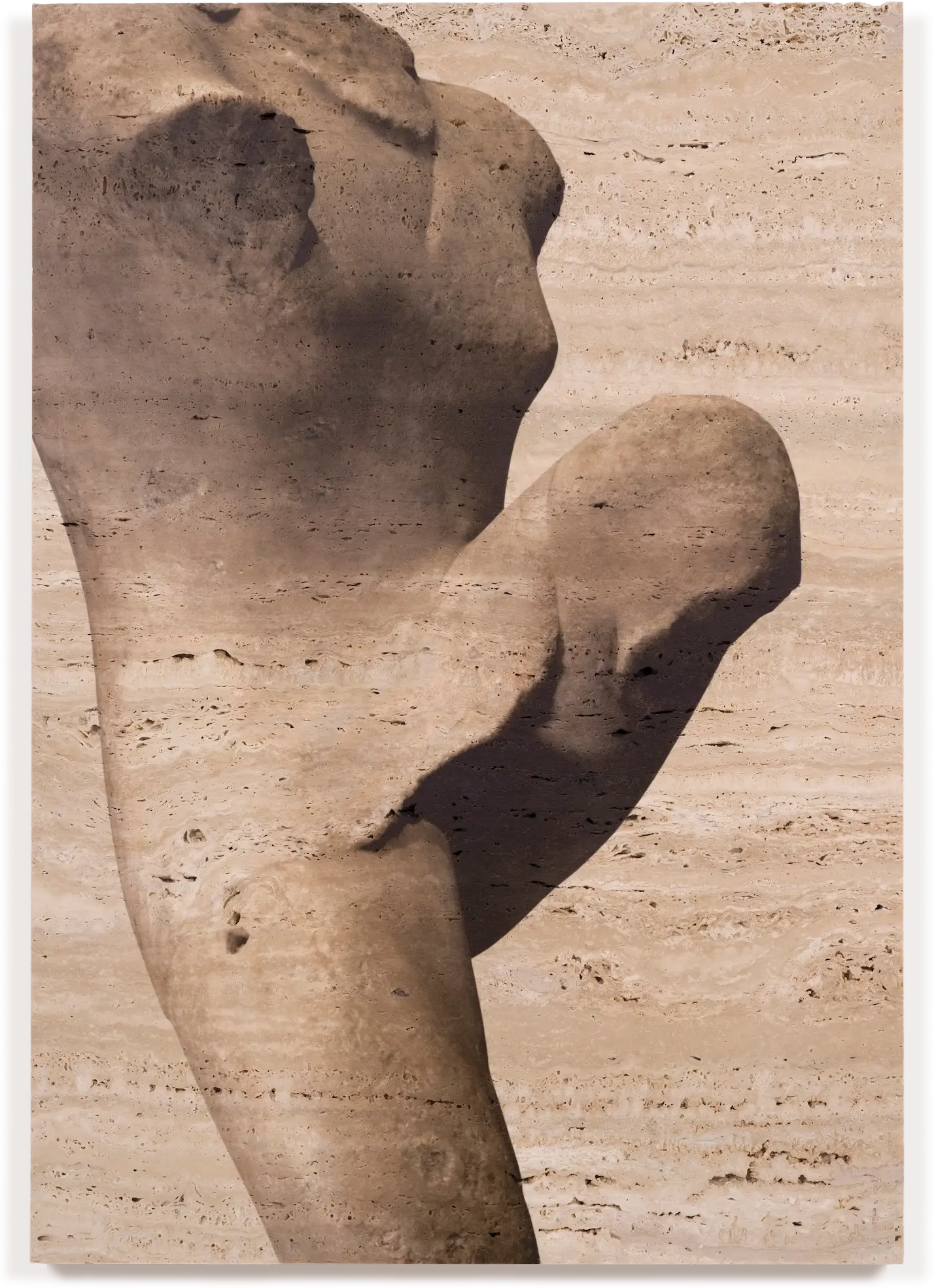
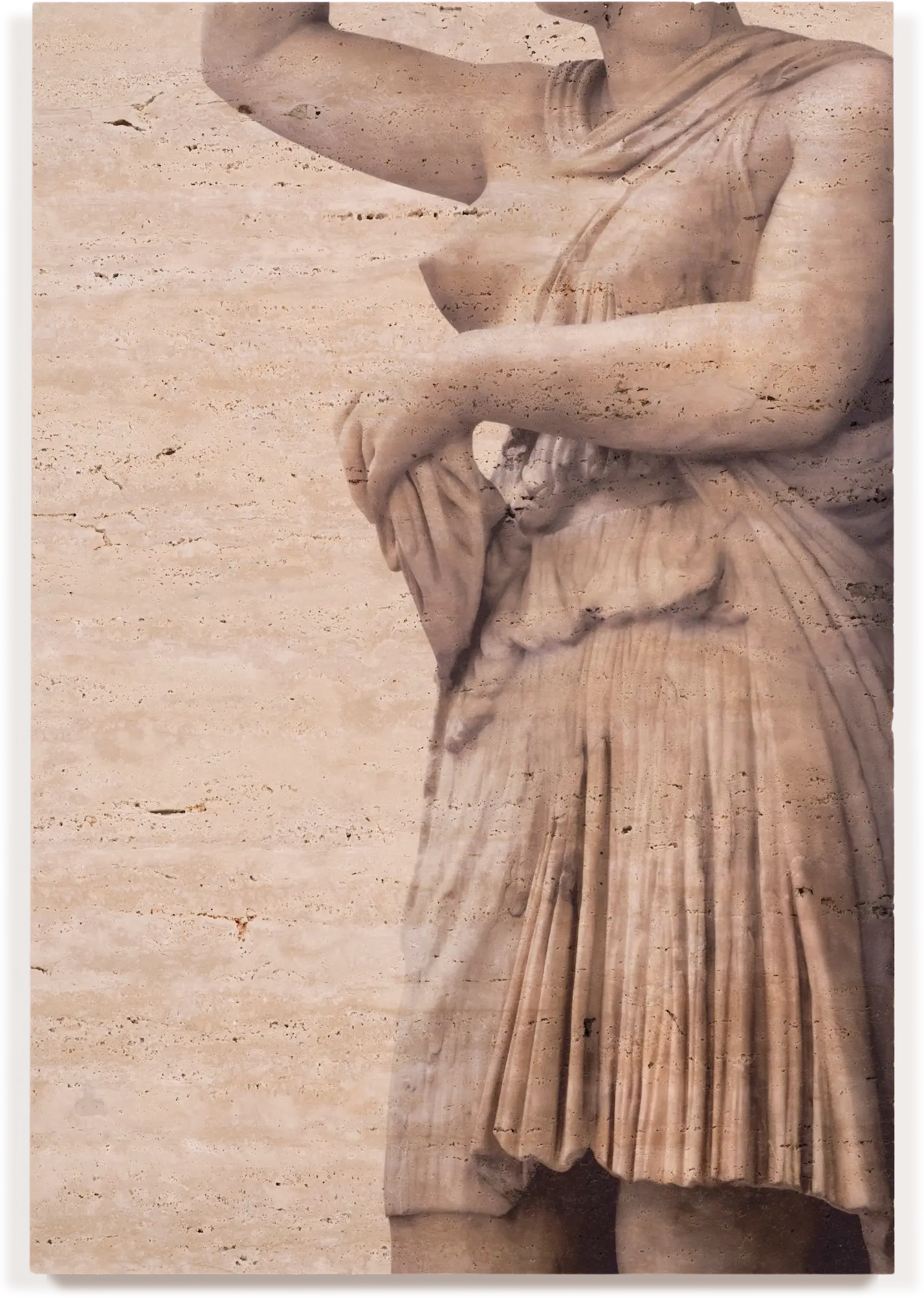
Ephesia, 2026
Elisa Sighicelli
34,3 x 23,6 x 1,6 in
Ed. 1 + 1 P.A
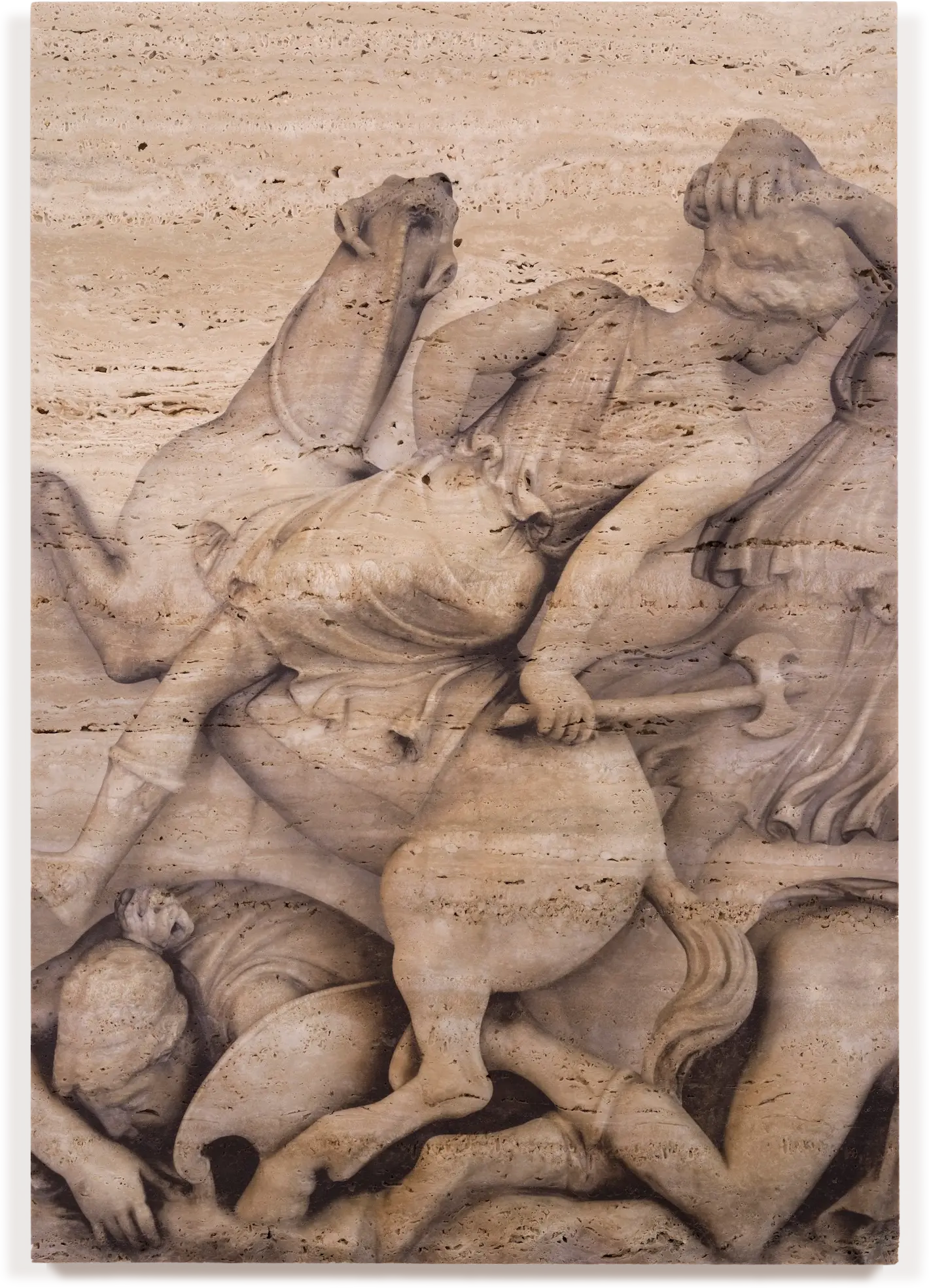
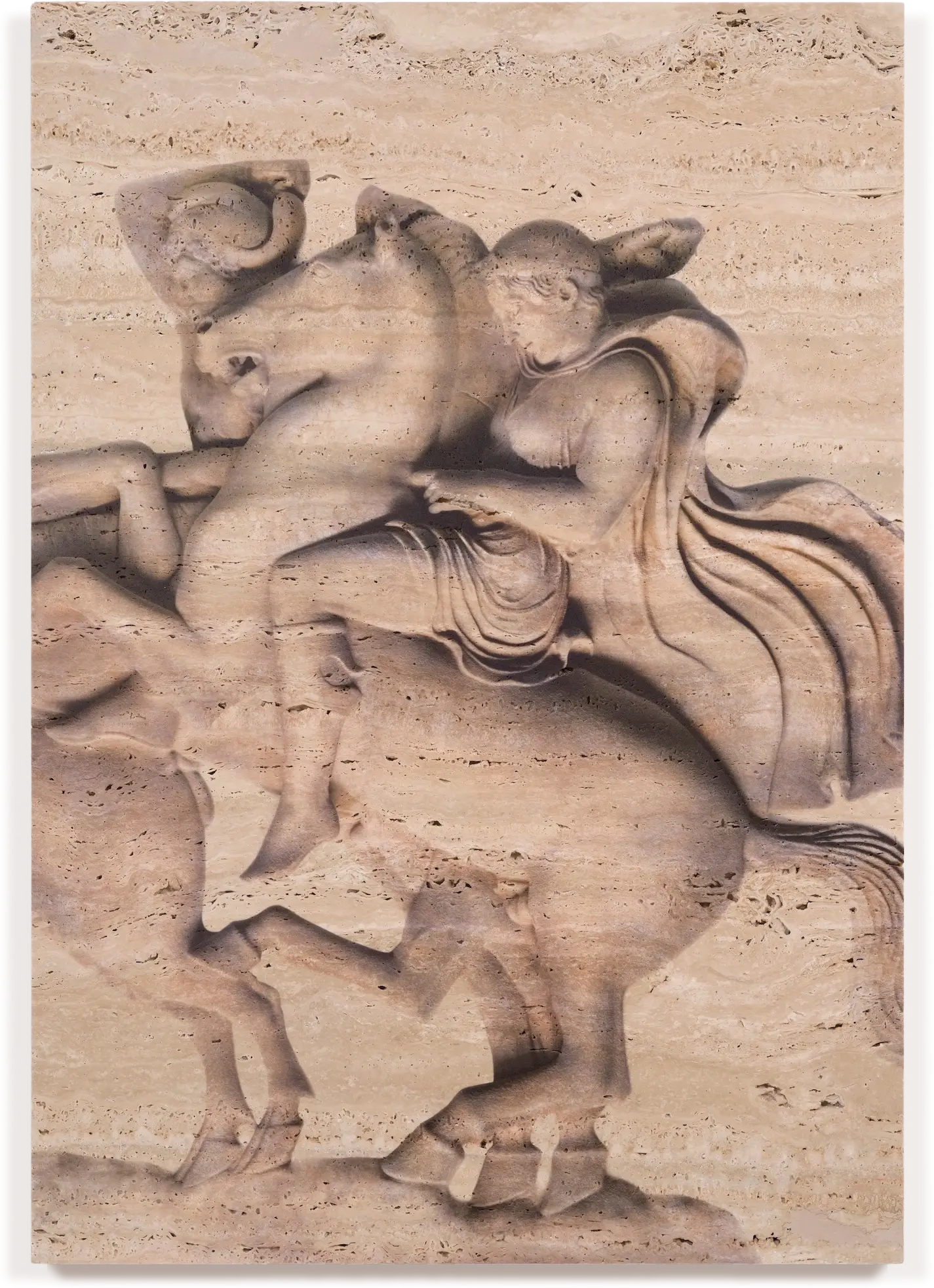
Hippolyta, 2026
Elisa Sighicelli
34,3 x 23,6 x 1,6 in
Ed. 1 + 1 P.A